
Corporate development strategies: How to get back into the competition?
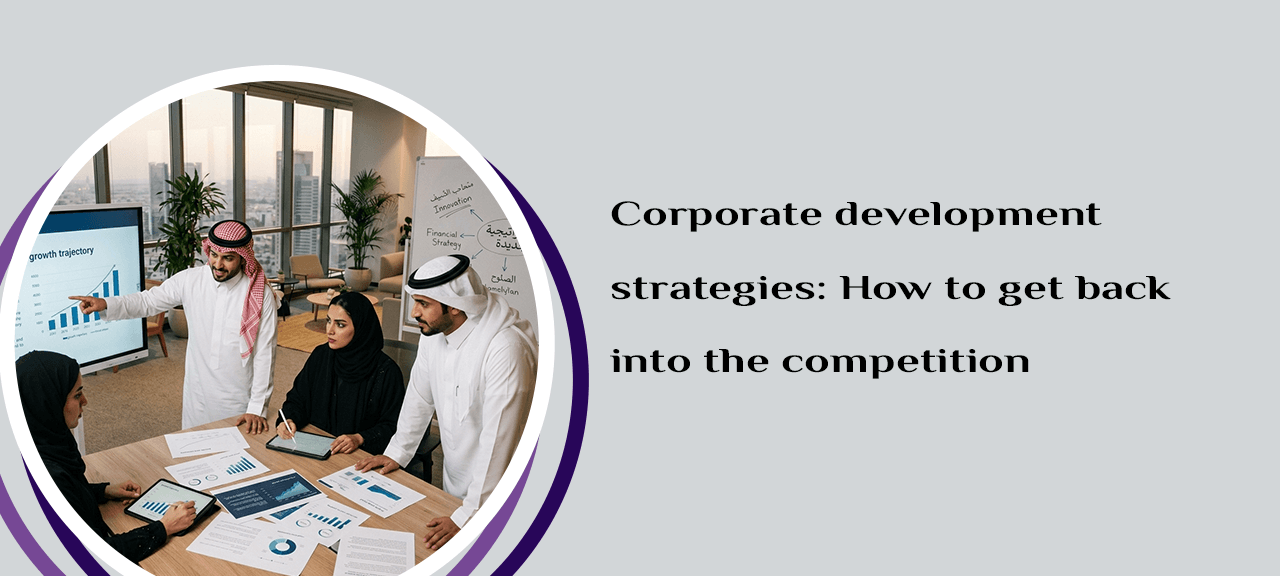
The Market is Merciless... Evolve or Be Replaced Without Warning!!
In today's business landscape, survival is no longer reserved for the strongest, but for those most capable of adaptation and renewal. Many institutions that once sat at the pinnacle of their industries have regressed, not due to a lack of resources, but because of a failure to engage in continuous Corporate Development.
Do not let your company become a cautionary tale. You are reading this because you seek to reclaim your natural position in market leadership. That is exactly what we will explore today.
What is Corporate Development?

The concept of Corporate Development refers to a comprehensive set of processes and strategies aimed at enhancing an organization's overall performance, increasing its efficiency, and strengthening its ability to adapt to market fluctuations.
Development is never restricted to a single department; it is a holistic approach that includes:
- Restructuring the Organizational Framework: Ensuring the hierarchy supports speed and innovation.
- Optimizing Operational Processes: Removing bottlenecks and reducing waste.
- Enhancing Human Capital: Elevating the skills and engagement of the workforce.
- Updating Marketing Strategies: Realigning the brand with modern consumer behavior.
But what caused this fall in the first place?
Why Do Companies Fall Out of the Competition?

The exit of an institution from the spotlight is rarely a stroke of bad luck. Rather, it is a symptom of a deep chasm between the speed of market change and the slowness of management response. The primary causes of failure include:
- Relying on past triumphs leads to complacency, causing leaders to ignore the necessity of ongoing development.
- When bureaucracy makes operations more expensive than the revenue they generate.
- Companies that refuse to invest in modern tech hand their competitors a golden ticket to outperform them.
- Weak internal communication and disconnected leadership lead to unrealistic decisions and erratic execution.
- Danger often comes from agile startups and disruptive strategies rather than traditional rivals.
- Organizations without robust Contingency Plans collapse at the first sign of economic turbulence.
Once the decline begins, many leaders attempt to salvage the situation through fragmented efforts and quick fixes. By relying on personal opinions and general advice rather than data-driven strategies from professional management consultants, the result is almost always the same: a resounding failure to return to the competition and a total exhaustion of remaining resources.
Why Do Some Companies Fail to Reclaim the Lead?
Many leaders notice the decline and attempt to save the situation through individual, uncoordinated efforts.
Without the guidance of a Management Consulting Firm that possesses a proven strategy, these attempts often result in a "Resurrection Failure."
The most prominent reasons for failing to return to the competition include:
- Ignoring Internal Rot: Spending the budget on external polishing while the real defect lies in the supply chain or product quality.
- Absence of KPIs: Successful Corporate Development is measured by data and tangible results, not by a feeling of improvement.
- Wasting Time and Effort: Attempting to reinvent the wheel instead of seeking specialized advice that puts you directly on the right path.
- Resistance to Change: Management's refusal to update business models that were successful decades ago but are now obsolete.
- Lack of Clear Vision: Starting Corporate Development without specific, measurable goals leads to scattered efforts and wasted resources.
- Neglecting the Human Element: Any plan that ignores employee training or digital literacy is doomed to fail.
Practical Steps to Rebuild and Return to the Lead!


Returning to the top is not a stroke of luck; it is the result of committing to a rigorous methodology. It requires a shift from Random Management to Results-Based Management.
1. Diagnosing the Institutional Reality
Before any Corporate Development, senior management must realize that development starts from within. This involves:
- Gap Analysis: Identifying the distance between where you are and where the market demands you to be.
- Identifying Institutional Weaknesses: Pinpointing exactly where the leaks are.
- Re-engineering Customer Value: Redefining why customers should choose you over others.
2. Business Process Re-engineering (BPR)
Review every single step within your institution. Eliminate bureaucratic hurdles that drain time and simplify workflows to ensure agility.
3. Digital Transformation and Automation
In the modern era, Corporate Development is synonymous with technology. Integration helps in:
- Reducing Human Error: Accelerating work through the automation of repetitive tasks.
- Precision Decision-Making: Relying on real-time data and predictive analytics.
4. Investing in Business Intelligence (BI)
Market leaders are those who utilize data analysis to understand consumer behavior and anticipate shifts before they happen.
5. Developing Human Capital and a Culture of Innovation
An institution is simply a collection of minds, and to advance Corporate Development, you must:
- Train employees on modern tools.
- Encourage an environment where innovative ideas are rewarded, not suppressed.
6. Empowering Talent, Not Just Hiring
Seek out creators and innovators. Make your work environment a magnet for high-level thinkers who have the capacity to drive development.
7. Brand Repositioning
Corporate development includes a look at your visual and value identity:
- Emphasize the new competitive advantages the company has gained.
- Search for untapped opportunities or new target segments to diversify income.
8. Financial Sustainability and Risk Management
Build a strong financial structure that can withstand economic crises:
- Invest in assets that provide long-term returns.
- Reduce dependence on a single product or service.
9. Building a Scalable Identity
Ensure your brand is flexible enough to evolve over time. Rigidity is the beginning of the end.
10. Partnering with Management Consulting Experts
Attempting all the above individually is resource-intensive. Partnering with specialists, such as SAEE Management Consulting, ensures a precise, scientifically-backed strategy that transforms complex challenges into growth opportunities.
Conclusion:
Always remember: stagnation is the primary enemy of success. Investing in corporate development today is the only guarantee that your institution will not become a mere memory in market history.
Are you ready to be the next success story in the Saudi market? Connect with SAEE experts now.
FAQ:
What is the function of Corporate Development?
It aims to improve performance and drive growth through:
- Setting long-term growth strategies.
- Analyzing the current situation to identify strengths and weaknesses.
- Improving internal processes to raise efficiency and cut costs.
- Developing products/services to meet market needs.
What is the difference between Business Development and Sales?
- Business Development: Focuses on creating new growth opportunities, building partnerships, and long-term strategy.
- Sales: Focuses on hitting immediate daily or monthly revenue targets.
What are the 5 essential skills for success in any role?
To thrive during a corporate transformation, one needs:
- Effective Communication: The ability to express ideas clearly.
- Problem Solving: Practical thinking to find rapid solutions.
- Teamwork: Collaborating to achieve collective goals.
- Adaptability: Keeping pace with changes and new technologies.
- Leadership: Taking initiative and driving results.