
Business development strategies in the age of technology: How to keep up with change
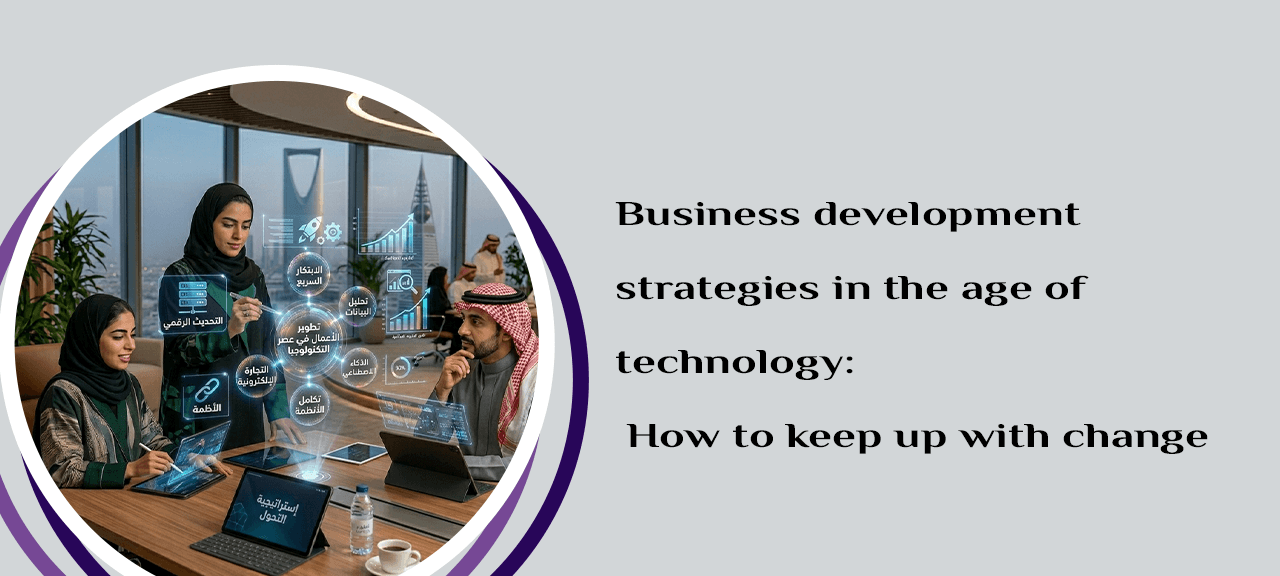
Digital evolution is a choice... so how will you face the future?
Modern Business Development Strategies act as a compass in today's tech-driven market, guiding companies toward flexible, innovative models that achieve in months what previously took years.
What is meant by Business Development Strategies?
These Business Development Strategies are essential tools for seizing opportunities and expanding intelligently. Below is a concise clarification of their core concept and objectives:

1. Definition of Business Development Strategy:
It is a roadmap that includes a set of plans, processes, and activities aimed at improving an organization's position and creating long-term added value. This concept does not rely on quick profit; rather, it focuses on three main pillars: customers, markets, and relationships.
2. The Difference Between Random Growth and Strategic Growth:
- Random Growth: Unplanned expansion driven by temporary circumstances, often leading to collapse during crises.
- Strategic Growth: Deliberate expansion built on Business Development Strategies, utilizing data analysis and risk management to ensure sustainable success.
3. Objectives of Business Development Strategy:
- Market Expansion: Targeting new geographical areas and untapped customer segments.
- Revenue Growth: Increasing sales through product innovation that meets evolving market needs.
- Operational Efficiency: Lowering costs and boosting quality by adopting modern technologies.
- Competitive Advantage: Becoming the preferred choice through continuous innovation and unique value.
How has technology changed the concept of business development?

Technology has revolutionized Business Development Strategies, shifting them from guesswork to data-driven precision as follows:
- From Traditional to Digital: Digitalization has shifted business development from field visits to data-backed decisions, transforming both operational tools and management mindsets.
- Data-Driven Strategy: Data is now the primary fuel for Business Development Strategies, replacing guesswork with deep analysis of consumer behavior and market trends to ensure precision.
Key Business Development Strategies in the Age of Technology:
Modern Business Development Strategies integrate technical innovation into core operations, enabling organizations to transcend traditional growth limits and reach new competitive horizons.
- Digital Transformation: Integrating technology to reinvent the customer experience and deliver faster, higher-quality services.
- Continuous Innovation: Making constant product and service evolution a core part of Business Development Strategies to stay ahead of market trends.
- Digital Market Expansion: Leveraging e-commerce and online platforms to achieve cross-border growth at a lower cost than physical expansion.
- Strategic Partnerships: Collaborating with tech specialists to access advanced expertise and tools without building them from scratch.
Don't wait for change.. be the one who creates it with intelligence and professionalism through the Sa’ee platform.
The Role of Artificial Intelligence in Business Development Strategies:
Artificial Intelligence is the actual engine of the next generation, providing organizations with superior capabilities to analyze big data and predict market trends with unprecedented accuracy. It works on:
1. Improving Decision-Making:
AI serves as a tool for analyzing big data and predicting future trends, allowing companies to anticipate changes in demand and adjust their Business Development Strategies proactively.
2. Process Automation:
Automation contributes to significantly reducing operational costs and increasing efficiency. Repetitive tasks are completed with precision, freeing the human workforce to focus on creative and strategic tasks that add real value to the organization.
How do Business Development Strategies help improve customer experience?
These strategies bridge the gap between customer aspirations and organizational capabilities, leveraging technical tools to deliver customized solutions that exceed expectations:
1. Understanding Customer Needs:
Technology allows us to deeply analyze customer behavior—what do they prefer? When do they buy? This understanding allows for the customization of services and products to suit the aspirations of each customer.
2. Providing Integrated Digital Services:
Speed is the new currency. Providing easy-to-use applications and platforms ensures that the customer can obtain the service at the click of a button, which raises loyalty and satisfaction rates.
How do you build a successful business development strategy?

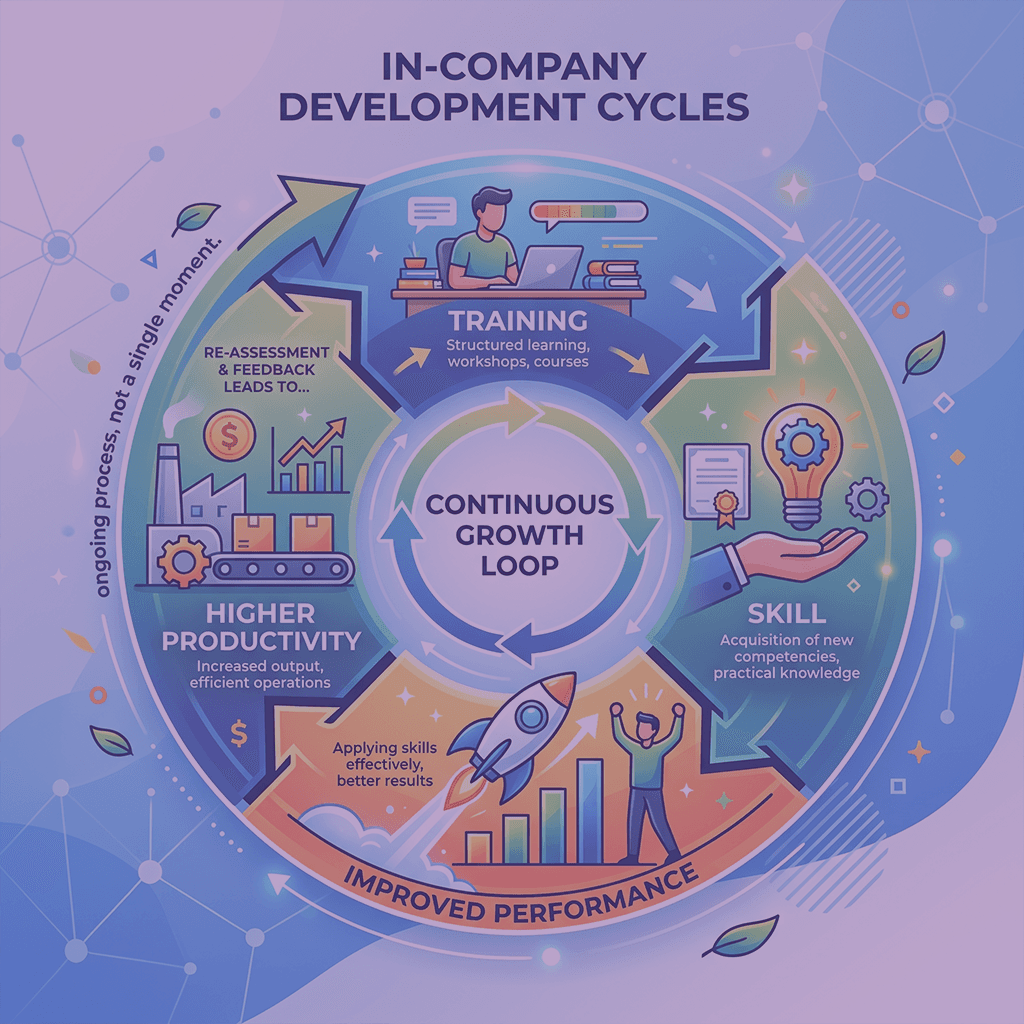
- Understanding Customer Needs: Technology enables deep analysis of behavior to provide customized services that align with individual aspirations.
- Integrated Digital Services: Providing fast, user-friendly digital platforms boosts customer loyalty and satisfaction.
Building Successful Business Development Strategies
Developing effective Business Development Strategies requires a systematic vision through these steps:
- Current Analysis: Use SWOT analysis to evaluate strengths, weaknesses, and overall performance.
- Strategic Goals: Set SMART (Specific, Measurable, Achievable, Relevant, Time-bound) goals aligned with the company's vision.
- Technological Integration: Choose ERP systems and analytical tools that fit your business scale.
- Implementation & Monitoring: Continuously measure performance and adjust to remain agile.
Ultimately, Business Development Strategies represent a flexible mindset. Adopting digital development today is the only way to ensure leadership and a successful future.
Discover business development packages from Sa’ee and turn your ambitions into reality.
Conclusion:
Business Development Strategies in the digital age are no longer just plans aimed at increasing profits; they are a comprehensive transformation process that blends technical innovation with human flexibility. Therefore, the gap between leading and struggling companies lies in the speed of adopting these strategies and employing technology as a strategic partner, not just a supporting tool.
The future belongs to those who possess the vision to anticipate change and the courage to invest in the minds of their staff and their digital tools to ensure sustainable growth that does not stop at the boundaries of crises.
FAQ:
What are Business Development Strategies?
They are a set of plans and activities aimed at creating long-term value for the organization by building strong relationships, opening new markets, and maximizing the use of company resources. They blend innovation and seizing opportunities to achieve sustainable growth that goes beyond just a momentary increase in sales.
What are the steps for business development?
- Precise analysis of the market and competitors to identify available opportunities.
- Developing a flexible strategy that translates these opportunities into tangible goals.
- The actual implementation phase with performance monitoring via Key Performance Indicators (KPIs).
- Continuous improvement to ensure keeping pace with sudden changes in the business environment.
What are the types of business management strategies?
- Corporate-level strategy: Which determines the general direction of senior management.
- Business-level strategy: Which focuses on competition and excellence in a specific market.
- Functional-level strategy: Which concerns the efficiency of departments such as marketing and operations to achieve integration and overall institutional success.
What are the five levels of entrepreneurship?
- Self-employment and reliance on personal skills.
- Management and work organization.
- Leadership and team direction.
- Investment or capital operation.
- True entrepreneurship.