
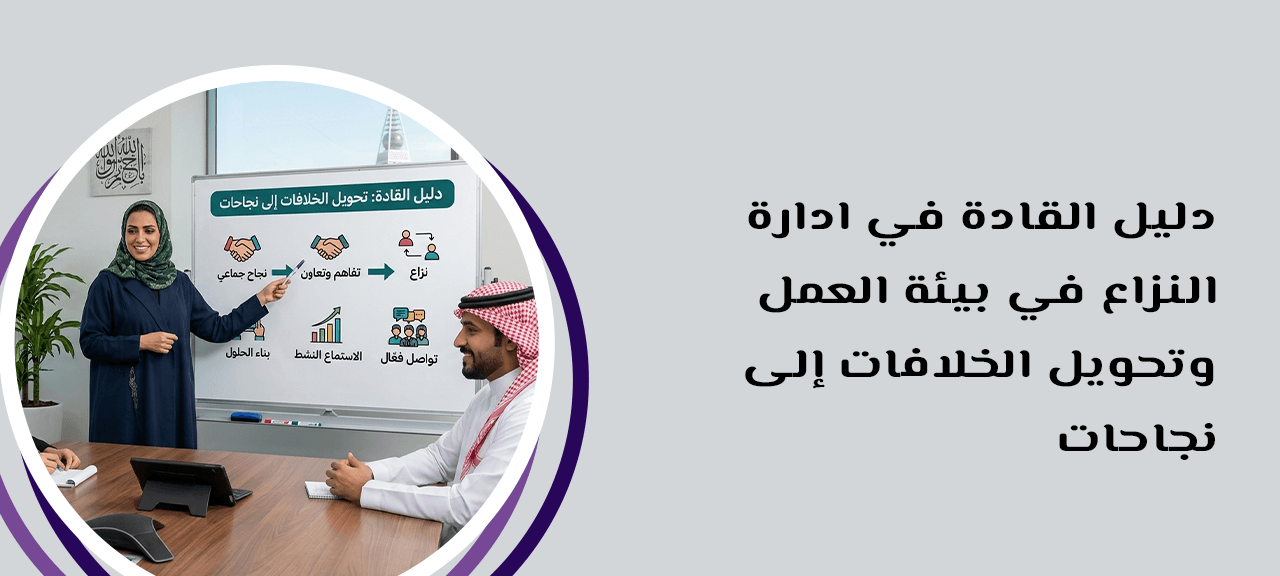
دليل القادة في ادارة النزاع في بيئة العمل وتحويل الخلافات إلى نجاحات
أنت لا تخسر موظفيك فقط.. أنت تخسر حصتك السوقية!!
خلف كل مشروع أو عميل يغادر غالبًا ما توجد خلافات داخلية استنزفت طاقة الموظفين قبل أن تصل خدماتك للجمهور.
فاليوم أي خلاف إداري هو مشكلة تؤثر مباشرة على سرعة القرارات، وجودة الإنتاج، وبالتالي أرباح شركتك لذلك يجب من المدير إدراك الأمر بسرعة وتعلم كيفية ادارة النزاع في بيئة العمل… وهذا الذي سوف نتحدث عنه بالتفصيل خلال مقالتنا.
ما هو مفهوم النزاعات في العمل؟
قبل أن تحاول في ادارة النزاع في بيئة العمل يجب معرفة ما معنى هذا الذي تتعرض له شركتك… فـ مفهوم النزاعات في العمل باختصار هو حالة من التعارض أو عدم الاتفاق تحدث بين الموظفين، أو بين الإدارات المختلفة نتيجة لاختلاف الآراء أو تضارب المصالح والمسؤوليات أو نتيجة لضعف التواصل.

وهذا يؤثر بالتأكيد بالسلب على الأداء والإنتاجية إذا لم يتم التعامل معه بذكاء.
لذلك تظهر أهمية ادارة النزاع في بيئة العمل كعملية تنظيمية تهدف إلى احتواء هذه الخلافات وحلها بطرق موضوعية تحافظ على استقرار الشركة ومصالحها التشغيلية.
وأنت كمدير وصانع القرار يجب عليك لكي تتمكن من التعامل مع هذه المواقف بكفاءة تمييز أنواع النزاعات في العمل والتي تنقسم عادةً إلى أربعة أنواع رئيسية:
- النزاعات الشخصية: وتحدث نتيجة اختلاف الشخصيات، أو الطباع، أو عدم التقبل النفسي بين زملاء العمل.
- نزاعات المهام والأفكار: وهي خلافات حول طبيعة العمل نفسه، مثل الاختلاف على خطة تسويقية، أو آلية تنفيذ مشروع.
- النزاعات التنظيمية والهيكلية: وتنشأ بسبب تداخل الصلاحيات، أو غياب نظام الحوكمة، أو التنافس على الموارد المحدودة.
- نزاعات القيمة والمبادئ: وتحدث بسبب اختلاف الخلفيات الثقافية أو المبادئ الشخصية للموظفين حول كيفية اتخاذ القرارات.
ولكن من أين بدأ هذا كله؟
فالنزاعات لا تشتعل فجأة من تلقاء نفسها بل تكون نتيجة لثغرات وتراكمات داخل نظام العمل اليومي.
ما هي أسباب الخلافات التشغيلية في الشركات؟
ففهم هذه الثغرات التي تؤدي إلى هذه النزاعات هو أول حل لكي تنجح في ادارة النزاع في بيئة العمل… وإليك أبرز الأسباب التي تؤدي إلى بدء الخلافات داخل الشركات:
- تداخل الصلاحيات: وغياب الحوكمة وعدم وضوح الأدوار والمهام لكل موظف.
- ضعف التواصل الداخلي: والاعتماد على الشفهية أو وسائل غير رسمية وبالتالي سوء الفهم.
- التنافس الحاد بين الأقسام: على الميزانيات، أو الأدوات التقنية، أو الكوادر البشرية.
- جمع كفاءات من خلفيات وثقافات متنوعة: دون وضع نظام موحد يدمج بينهم.
- شعور بعض الموظفين بالتحيز: أو غياب العدالة في توزيع المكافآت والترقيات.
- وجود مدراء يفتقدون لمهارات الحسم: أو يتبعون أسلوب الـ Micromanagement والتدخل في أدق التفاصيل وهذا يرفع من حدة التوتر.
والآن لنذهب للجزء الأهم…
5 استراتيجيات ذكية لادارة النزاع في بيئة العمل!
فـ بعد أن وضعنا أيدينا على أسباب الخلافات يأتي الدور الآن على الحلول… فالقائد الذكي لا يقف عند مرحلة معرفة المشكلة بل يتحرك فورًا لتطبيق أدوات إدارية تحمي شركتك وتضمن نموها.
لهذا إليك 5 استراتيجيات ذكية لادارة النزاع في بيئة العمل يمكنك تطبيقها حسب طبيعة الموقف:
- مناقشة المشكلة والبحث عن حلول ترضي جميع الأطراف.
- مبدأ التنازل المتبادل حيث يقدم كل طرف تنازل بسيط للوصول إلى نقطة التقاء.
- يتدخل القائد بشكل مباشر ويستخدم سلطته لفرض حل ينهي الخلاف فورًا.
- تأجيل النقاش لفترة قصيرة حتى تهدأ النفسيات وتتوفر معطيات أكثر ومعلومات.
- إدخال طرف ثالث محايد من داخل الشركة للاستماع وتقريب وجهات النظر دون تحيز.
ولكن الذكاء القيادي الحقيقي لا يتوقف عند مجرد فض المشكلة وتهدئة الأوضاع بل يذهب لأبعد من ذلك بكثير حيث يبدأ باستغلال هذا الوضع.
كيف تحول القيادة الذكية الخلافات إلى نجاحات؟
فـ تفعيل آليات ادارة النزاع في بيئة العمل بشكل صحيح لا يهدف إلى إسكات الأصوات بل إلى استثمارها… حيث يمكنك تحويل الصدام التشغيلي إلى ميزة تنافسية وحلول مبتكرة من خلال هذه الخطوات:
- تحويل النقاش من صراع أشخاص إلى تحدي أفكار وهذا يفتح الباب لابتكار حلول تسويقية وتشغيلية غير تقليدية لتطوير المنتجات.
- استخدام الخلافات كأداة إرشادية تكشف بوضوح عن الأنظمة الضعيفة أو الفجوات التنظيمية التي تحتاج إلى حوكمة وتعديل.
- دراسة وجهات النظر المتعارضة تمنع الإدارة من اتخاذ قرارات متسرعة أو أحادية الجانب.
- عندما يرى الموظفون أن اختلاف الرأي لا يواجه بالضغط بل بالنقاش والبدء في ادارة النزاع في بيئة العمل تزداد ثقتهم في المنظومة ويرتفع ولاؤهم الوظيفي.
فهذا يوضح لنا أن هذه الخلافات بقدر أنها تسبب مشاحنات ولكنها مفيدة بل وطبيعي حدوثها.
متى يكون الخلاف صحي داخل المنشأة؟
يكون الخلاف صحي عندما يركز على تطوير الأفكار، تحسين جودة الخدمات، وانتقاد آليات العمل وليس الأشخاص، وهذا يفتح الباب للتطوير ويمنع الركود الفكري داخل الفريق.
ما خطورة إهمال إدارة النزاع في بيئة العمل؟
يؤدي إهمال التدخل إلى خلق بيئة عمل سامة، تراجع حاد في الإنتاجية، زيادة معدل دوران الموظفين، وضياع فرص استثمارية ضخمة بسبب تشتت جهود الكفاءات في صراعات جانبية.
دور الموارد البشرية والـ HR في ضبط التوازن داخل المنظمة!
يعتبر قسم الموارد البشرية هو الطرف المحايد الذي يحمي الشركة من أي تفكك داخلي بسبب الخلافات والمتخصص في ادارة النزاع في بيئة العمل.
فلا يقتصر دور هذا القسم على التدخل بعد بداية الأزمة فقط بل يبدأ بوضع قواعد واضحة تحمي الجميع وتحدد مسؤوليات كل موظف لمنع المشاكل قبل حدوثها.

وعند ظهور أي خلاف تشغيلي يتدخل الـ HR كحلقة وصل وتواصل آمنة وسرية تضمن الاستماع لكل الأطراف بكل عدالة ودون تحيز وهذا يساعد في تفكيك المشكلة والوصول إلى حلول عملية تركز على مصلحة العمل واستقرار الموظفين.


ومن خلال تنظيم ورش عمل مستمرة لتعليم الفرق مهارات التواصل الفعال والذكاء العاطفي يساهم القسم في بناء بيئة عمل صحية ومريحة تضمن نجاح ادارة النزاع في بيئة العمل وتوجيه كل الطاقات نحو زيادة الإنتاجية وتحقيق الأرباح بدلاً من تضييع الوقت في الصراعات الجانبية.
ما هي الأخطاء الشائعة عند التعامل مع النزاعات المؤسسية؟
وقوع الإدارة في فخاخ معينة قد يفاقم الأزمة بدلاً من حلها، ومن أبرز هذه الأخطاء:
في طريق السعي نحو ادارة النزاع في بيئة العمل يقع الكثير من المدراء في فخاخ إدارية تأتي بنتائج عكسية تمامًا… فبدلاً من احتواء الأزمة تساهم بعض التصرفات العفوية في زيادة حجم المشكلة وخسارة الكفاءات.
فـ لكي تحمي شركتك وحصتك السوقية إليك أبرز الأخطاء الشائعة التي يجب تجنبها:
- تجاهل المشكلة والأمل في أن تختفي وحدها.
- الانحياز العاطفي وغير المدروس لطرف دون الآخر.
- البحث عن كبش فداء بدلاً من حل أصل المشكلة.
- التدخل المتأخر بعد فوات الأوان.
- فرض حلول مؤقتة ومسكنات سطحية.
الخاتمة:
في النهاية تذكر دائمًا أن بقاء منشأتك في الصدارة لا يعتمد فقط على قوة منتجك بل على تماسك الفريق الذي يصنعه وإهمال ادارة النزاع في بيئة العمل هو الثغرة التي تتسلل منها الكفاءات خارج شركتك وبالتالي تتبعها حصتك السوقية وأرباحك.
فالاستثمار في بناء قنوات تواصل واضحة وحوكمة الصلاحيات بالتعاون مع قسم الموارد البشرية هو الضمان الأكيد لتحويل كل طاقة صدام داخلية إلى وقود يدفع شركتك نحو الصدارة والربحية المستدامة.
تواصل الآن مع مستشارين شركة سعي ولا تترك الخلاف حتى يقضي على شركتك.