
استراتيجيات استقطاب الكفاءات لتقليل دوران الموظفين

تبذل جهد كبير في التوظيف ثم تتفاجأ بالاستقالة؟!
هذا السيناريو المتكرر هو الكابوس الأكبر الذي يواجه الرؤساء ومديري الموارد البشرية في سوق العمل اليوم والحقيقة هي أن أزمة الاستقالات لا تبدأ بسبب غياب الحوافز أو بيئة العمل بل تبدأ جذورها من الخطوة الأولى.
وهي أن المنشأة تفتقر لمهارة استقطاب الكفاءات المناسبة وليس فقط لتعيين أفراد بالأقسام فكيف تصنع استراتيجية توظيف تضمن لك الولاء والاستقرار؟ تعال لنتعرف سويًا على إجابة هذا السؤال.
ما معنى كلاً من: استقطاب الموظفين ومعدل الدوران؟
في البداية ولإدارة رأس المال البشري بذكاء في شركتك يجب أولاً فهم المعادلة التي تحكم الاستقرار والتي تتكون من كفتي ميزان… المدخلات وهو التوظيف والمخرجات وهي الاستقالات.
ما هو استقطاب الكفاءات؟

هو استراتيجية منظمة ومستمرة تبحث فيها المنشأة عن العقول والمواهب المتميزة من الجنسين وجذبهم للعمل لديها فالأمر لا يقتصر على مجرد توظيف سريع لسد فراغ ولكنه استثمار ذكي لاختيار أشخاص يتوافقون مع ثقافة الشركة ويمتلكون الجدارات التي تضمن نموها مستقبلاً.
ما هو معدل دوران الموظفين؟

هو مقياس يقيس النسبة المئوية للموظفين الذين يغادرون المنشأة سواء بالاستقالة أو الإقالة ويتم استبدالهم بغيرهم خلال فترة زمنية محددة غالبًا سنة.
والارتفاع في هذا المعدل يعني وجود خلل في البيئة الداخلية أو في الاختيار من البداية وهذا يكلف الشركة ميزانيات ضخمة لإعادة التوظيف.
وأعتقد أنك تعرفت على العلاقة بينهم ولكني دعني أشرح أكثر.
ما العلاقة بين استقطاب الكفاءات ومعدل دوران الموظفين؟
العلاقة بينهما عكسية تمامًا فـ كلما ارتفعت جودة واحترافية عملية استقطاب الكفاءات بناءً على أسس علمية وتوافق وثقافي انخفضت معدلات دوران الموظفين وهذا يحمي المنشأة من التكاليف والخسائر ويضمن استقرار الإنتاجية والأرباح… والعكس صحيح.
فالتوظيف الصحيح يقلل تكاليف إعادة الإعلان والتدريب بنسبة تتجاوز 50% ويضمن لك بناء فريق مستقر ومحرك دائم للأرباح ولكن هناك أخطاء ترفع بشكل كبير جدًا من معدل الدوران.
أخطاء شائعة أثناء الاستقطاب ترفع معدلات الدوران!
فـ حتى مع أفضل استراتيجيات استقطاب الكفاءات يمكن أن تؤدي بعض الأخطاء الشائعة إلى زيادة معدل دوران الموظفين وتقليل فعالية التوظيف وأهم هذه الأخطاء:
- التركيز فقط على السيرة الذاتية دون تقييم التوافق الثقافي مع بيئة العمل.
- إجراء مقابلات سطحية دون اختبار المهارات أو فهم طريقة تفكير المرشح.
- عدم توضيح مهام الوظيفة بدقة وبالتالي توقعات غير واقعية للموظف.
- التأخير في الرد على المرشحين يجعل المرشحين يبحثون عن فرص أخرى.
- تجربة توظيف غير منظمة تقلل من انطباع الموظف عن الشركة.
- تقديم عروض غير عادلة أو غير واضحة وبالتالي شعور بعدم الاستقرار وعدم التقدير.
- إهمال الدعم خلال الأشهر الأولى قد يؤدي إلى ترك الوظيفة سريعًا.
تجنب هذه الأخطاء يضمن استثمار الجهد في استقطاب الكفاءات بطريقة صحيحة ويقلل من معدلات الدوران ويحافظ على فريق مستقر وملتزم.
والآن وحتى تعبر بشركتك إلى بر الأمان يجب أن توقف عن هذه الأخطاء فورًا والبدء في…
6 استراتيجيات لاستقطاب الموظفين ومنع هروب الكفاءات!
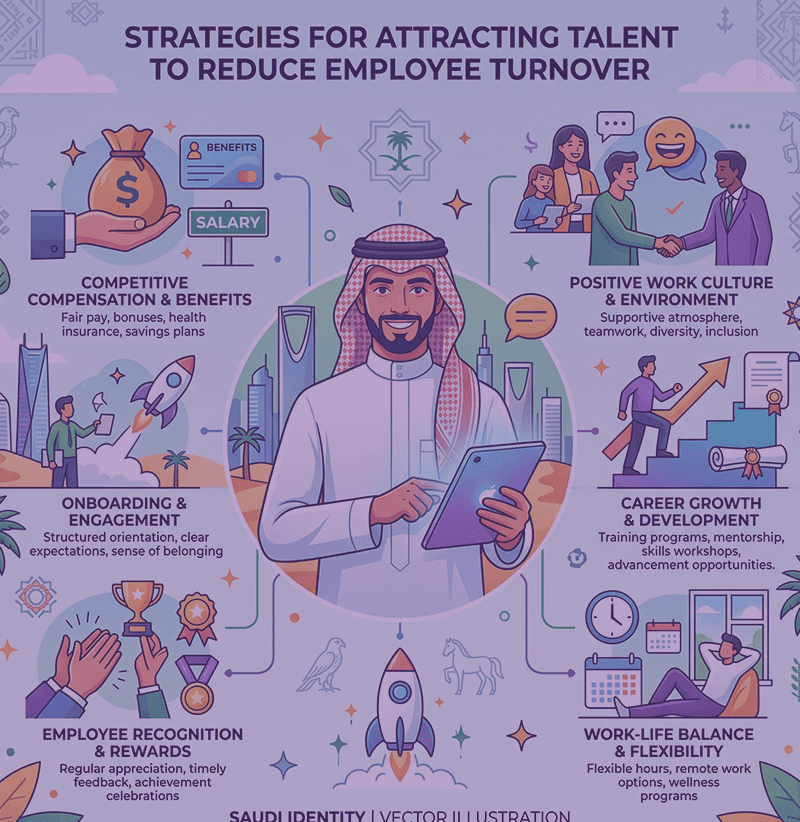
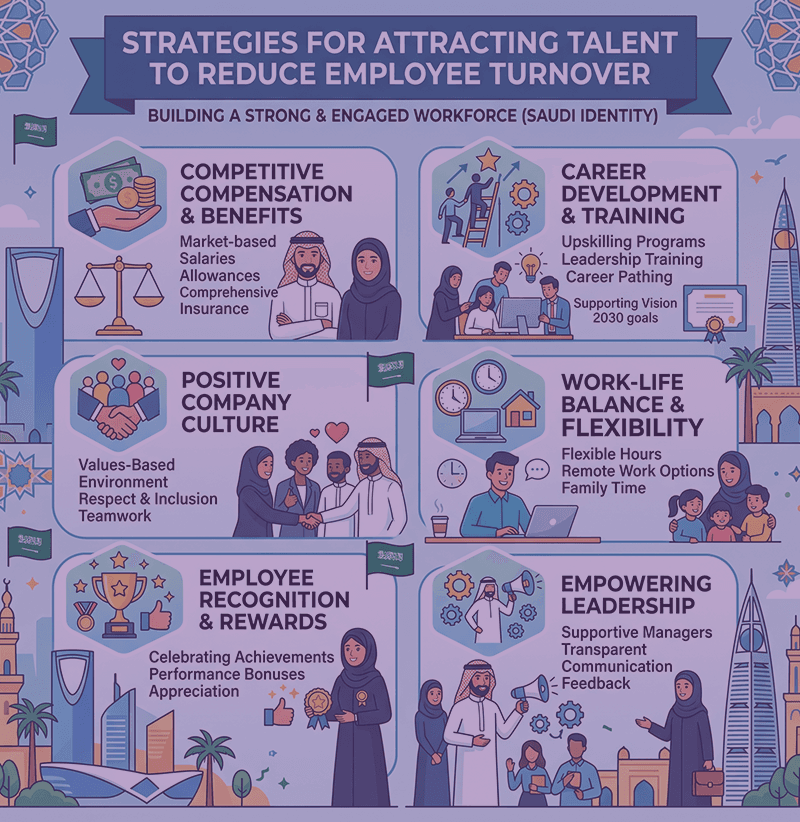
فـ حتى لتضمن بقاء منشأتك في الصدارة وتأمين استقرارها الداخلي إليك أهم الاستراتيجيات العملية التي تضمن نجاح عملية الاستقطاب واحتفاظك بالكفاءات:
1. بناء علامة تجارية جاذبة لصاحب العمل
استقطاب الكفاءات يتطلب إبراز ثقافة منشأتك، وقيمها، وقصص نجاح فريقك عبر منصات التواصل المهني مثل لينكد إن.
2. التوظيف بناءً على التوافق الثقافي
تصميم مقابلات عمل منظمة تختبر مدى تماشي قيم المُرشح مع رؤية المنظمة وأسلوب عملها وهذا يضمن بقاءه لسنوات طويلة.
3. صياغة وصف وظيفي دقيق
أحد أكبر أسباب الدوران السريع هو صدمة الواقع حيث يكتشف الموظف أن مهامه الفعلية تختلف تمامًا عما قيل له في المقابلة.
4. تقديم عروض أجور ومزايا مرنة وتنافسية
لن تنجح جهودك في استقطاب الكفاءات إذا كانت الرواتب المطروحة أقل من متوسط السوق فـ يجب إجراء دراسات دورية لرواتب المنافسين وابتكار مزايا تلبي التطلعات.
5. تفعيل برامج الإحالة الداخلية
فتح الباب لموظفوك الحاليون لترشيح زملاء سابقين أو معارف يثقون في كفاءتهم يسهل عملية استقطاب الكفاءات بشكل مذهل.
6. الاستثمار في رحلة الدمج والتهيئة
عملية استقطاب لا تنتهي بمجرد توقيع عقد العمل بل إن أول 90 يوم للموظف الجديد داخل المنشأة هي التي تحدد قرار بقائه أو رحيله.
ومع ذلك تشير الإحصائيات إلى أن الخطر الأكبر يكمن في الأسابيع الأولى فما الذي يجعل موظف قمت باختياره بعناية يقرر المغادرة فجأة بعد أسابيع قليلة؟
صدمة البدايات: لماذا تغادر الكفاءات بعد الشهر الأول من التوظيف؟
تعتبر الاستقالة المبكرة للموظف الجديد بمثابة جرس إنذار للشركات وتؤكد الأبحاث في مجال إدارة الأعمال أن مغادرة الموظفين المحترفين خلال أول 30 يوم لا تعود لأسباب مادية في الغالب بل ترتبط مباشرة بالفجوة بين الوعود والواقع وتتلخص أسبابها في الأسباب التالية:
- ترك الموظف في يومه الأول بلا مكتب، أو أدوات، أو خطة واضحة يعكس عشوائية المنشأة ويعجل برحيله.
- اكتشاف الموظف أن المهام الفعلية المطلوبة منه تختلف عما تم الاتفاق عليه.
- اكتشاف الموظف الجديد لعلامات البيئة السامة، غياب التقدير، أو الصراعات الداخلية خلال أسابيعه الأولى.
- غياب التوجيه، الدعم، والتواصل الفعال من قِبل الإدارة خلال الفترة التجريبية له.
فإن نجاح المنشأة في استقطاب الكفاءات يفقد قيمته إذا لم تتبعه رحلة احتضان ذكية تؤكد للموظف الجديد أنه اتخذ القرار الصحيح بالانضمام إليكم.
كيف يقيس صناع القرار نجاح خطط التوظيف؟
فلا يجب أن تقيس نجاحك على الانطباعات الشخصية لتقييم كفاءة التعيين بل على مؤشرات واضحة مثل:
- قياس النسبة المئوية للموظفين الذين يستمرون في الشركة لعام كامل على الأقل.
- حساب الوقت المستغرق من لحظة الإعلان عن الوظيفة وحتى توقيع العقد والهدف هو تقليله.
- مجموع المصاريف المنفقة على الإعلانات، المنصات، والمقابلات وقياس مدى الكفاءة المالية لقسم التوظيف.
- تقييم أداء الموظف الجديد ومدى إنتاجيته بعد أول 6 أشهر ومقارنتها بالتوقعات التي وُضعت أثناء استقطاب الكفاءات.
بإختصار يقيس صناع القرار نجاح التوظيف عبر معادلة تربط بين سرعة التعيين، وانخفاض التكلفة، وارتفاع معدل استبقاء الموظفين لضمان بناء فريق مستقر يحقق أرباح المنشأة.
لكن التحدي الأصعب هو…
كيف تحافظ على المواهب بعد استقطابها؟
فـ نجاح المنشأة في استقطاب الكفاءات لا يمثل سوى نصف المعركة والنص الثاني هو بتطبيق هذه الاستراتيجيات:
- توفير خطة نمو واضحة تضمن للموظف معرفة كيف سيتطور منصبه ومستواه المالي مستقبلاً.
- تفعيل المكافآت المادية والمعنوية مع تقديم مرونة توازن بين العمل والحياة كخيارات العمل الهجين.
- الاستثمار في تدريب مهارات الموظفين والذي يشعرهم بقيمتهم داخل المنشأة ويزيد من ولائهم.
- بناء بيئة شفافة تسمح للموظف بالتعبير عن تحدياته مع تطبيق نظام تقييم الأداء.
الخاتمة:
في النهاية يظل العنصر البشري هو المحرك الأساسي لأي توسع تجاري ناجح وعملية استقطاب الكفاءات ليست مجرد مهمة إدارية تنتهي بتوقيع العقد بل هي التزام استراتيجي مستمر يبدأ بالاختيار الذكي وينتهي بتوفير بيئة عمل تحفز على الابتكار وتمنع نزيف الاستقالات الصامت.
فإذا كنت تسعى لحماية استثماراتك وبناء فريق عمل مستقر ومحترف يدفع منشأتك نحو الصدارة، فلا تتردد في مراجعة آليات التوظيف والاستبقاء لديك فوراً.
هل تبحث عن حلول سريعة لمنشأتك؟
هل ترغب في الحصول على استشارة مهنية لتطوير استراتيجيات استقطاب الكفاءات وتطوير عمليات التوظيف في شركتك؟
تواصل مع خبراء سعي لاستشارات الموارد البشرية الآن.