
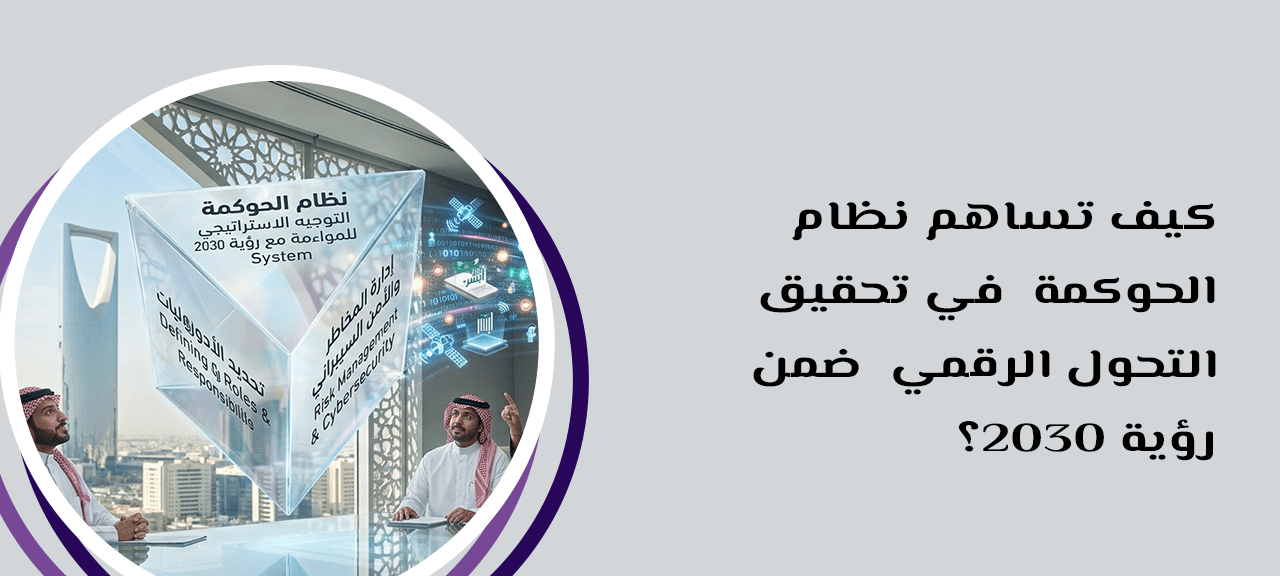
كيف تساهم نظام الحوكمة في تحقيق التحول الرقمي ضمن رؤية 2030؟
سيارة بلا مكابح… هذا هو مصير شركتك!!
للأسف هذا الوصف الأدق لكل منشأة تركض اليوم بسرعة نحو تبني التقنيات الحديثة، والأتمتة، والذكاء الاصطناعي دون خطة ضابطة… فالاندفاع نحو رؤية السعودية 2030 أمر رائع لكن التكنولوجيا بدون إدارة واعية تتحول إلى فوضى مُكلفة تهدد استقرار أعمالكم.
وهنا يجب أن تتوقف وتبدأ في معرفة نظام الحوكمة والذي يمثل المكابح التي تضمن لسيارتك الانطلاق بأقصى سرعة ولكن بأمان تام… لا تقلق فكل المعلومات التي ستبحث عنها حول هذا الموضوع ستجدها خلال مقالتنا اليوم.
ما المقصود بنظام الحوكمة في التحول الرقمي؟

الحوكمة في التحول الرقمي تعني وجود قواعد وسياسات ومسؤوليات واضحة تنظم طريقة اتخاذ القرار الرقمي داخل المؤسسة… فهي تحدد من يملك القرار، ومن ينفذ، ومن يراجع، وكيف يتم قياس النتائج، وما المعايير التي يجب الالتزام بها عند تطوير الخدمات أو إدارة البيانات أو إطلاق المشاريع التقنية.
بمعنى أبسط…
نظام الحوكمة لا يمنع الابتكار بل يمنحه مسار آمن ومنظم.
فـ بدلاً من أن تعمل كل إدارة بأسلوب منفصل ستصبح جميع الإدارات مرتبطة بإطار واحد يضمن أن المشاريع الرقمية لا تتكرر، ولا تهدر الميزانية، ولا تبتعد عن أهداف المؤسسة أو توجهات رؤية 2030.
إذًا فالأمر لا يتعلق بامتلاك أحدث البرامج بل بكيفية إدارتها لخدمة الخطة والهدف الأكبر.
ما الفرق بين التحول الرقمي والحوكمة الرقمية؟
التحول الرقمي هو عملية استخدام التقنية لتطوير الخدمات والعمليات ونماذج العمل أما الحوكمة الرقمية فهي الإطار الذي ينظم هذا التحول ويضمن أنه يسير وفق أهداف واضحة ومعايير قابلة للقياس.

بمعنى آخر التحول الرقمي هو ماذا نريد أن نغير؟ بينما نظام الحوكمة يجيب عن سؤال: كيف نضمن أن هذا التغيير يتم بطريقة صحيحة وآمنة وفعالة؟
لذلك لا يوجد تعارض بينهما بل هي علاقة تكاملية فـ كلما كانت الحوكمة أقوى كان التحول الرقمي أكثر استدامة وفعالية.
كيف يساهم نظام الحوكمة في تحقيق التحول الرقمي ضمن رؤية 2030؟
إن المساهمة الحقيقية التي تقدمها الحوكمة هي أنها تضمن نجاح المشاريع التقنية في المملكة بدون عشوائية وتظهر هذه المساهمة بوضوح من خلال:
- حماية الميزانيات وتوجيه المصاريف:يضمن نظام الحوكمة عدم هدر أموال الشركة في شراء برامج أو تكنولوجيا غير ضرورية بل يوجه الاستثمار نحو الأدوات الرقمية التي تفيد العمل وتزيد الأرباح.
- تسريع الانتقال للأنظمة الذكية:من خلال تحديد دور كل موظف ومسؤولياته تساهم في تقليل العشوائية وتساعد فريق العمل على تقبل الأنظمة الجديدة والعمل عليها بسرعة وسهولة.
- الالتزام بالقوانين والتشريعات السعودية:تطلق المملكة دائمًا شروط وقوانين صارمة للتعاملات الرقمية وهنا يتدخل نظام الحوكمة ليضمن التزام شركتك بالكامل بهذه القوانين لتجنب أي غرامات أو مشاكل قانونية.
- وضوح المسؤولية ومراقبة الأداء:توفر الحوكمة مؤشرات واضحة تتيح للإدارة معرفة نسبة إنجاز المشاريع الرقمية بدقة ومعرفة مكان الخلل وإصلاحه فورًا.
- اتخاذ قرارات صحيحة بناءً على الأرقام:يساعد نظام الحوكمة في تنظيم بيانات الشركة وهذا يتيح لك الوصول إلى تقارير دقيقة ولحظية تساعد في اتخاذ قرارات ذكية وناجحة لتطوير العمل.
ولكن لا يمكننا الحديث عن تكنولوجيا ناجحة دون تأمين المحرك الأساسي لها وهي المعلومات والبيانات التي تعتمد عليها منشأتكم… فهل هناك دور للحوكمة في حماية هذه الأصول من المخاطر والاختراقات؟
حوكمة البيانات والأمن السيبراني: كيف تحمي الحوكمة أمن بياناتك ومعلوماتك الرقمية؟
مع الاعتماد الكلي على السحابة والإنترنت تصبح البيانات هي الأصول الأكثر قيمة لأي منشأة وهنا يمثل نظام الحوكمة المظلة التي تحمي هذه الأصول حيث يضع سياسات واضحة تتعلق بـ:
- تصنيف البيانات وصلاحيات الوصول.
- الامتثال للأمن السيبراني.
- جودة ودقة المعلومات.
- حماية المعلومات الحساسة.
- ضمان الامتثال للأنظمة والمعايير.
والآن هل سألت نفسك لما كل هذا من الأساس وما الذي سيعود عليك من هذا النظام؟
ما هي فوائد تطبيق الحوكمة الرقمية في المؤسسات السعودية؟

عندما تدمج الشركات بين التكنولوجيا والإدارة فإنها تحقق مكاسب فورية تضمن استقرارها ونموها مثل:
- الالتزام بنظام الحوكمة يعكس احترافية شركتك وشفافيتها وهذا يجذب الاستثمارات المحلية والأجنبية تماشيًا مع رؤية 2030.
- تمنح الإدارة القدرة على اتخاذ قرارات سريعة ومبنية على أرقام حقيقية لمواجهة تغيرات السوق المفاجئة.
- تضمن الحوكمة استمرار تشغيل الأنظمة الرقمية بكفاءة عالية على المدى الطويل.
- تساعد في كشف المصاريف غير الضرورية وإلغاء المشاريع الرقمية المتكررة وهذا يوفر ميزانية الشركة.
- تضمن حماية كافة بيانات ومعلومات الشركة وبالتالي تقلل من احتمالية التعرض للاختراقات.
ومن هنا وبعد معرفتنا لما سنجنيه من هذا النظام يجب أن نبدأ بخطوات مدروسة.
خطوات تطبيق نظام الحوكمة داخل المؤسسات!
ولكن لا تقلق فـ تطبيق الحوكمة لا يعني إضافة طبقات إدارية معقدة بل بناء طريقة عمل واضحة تساعد الجميع على اتخاذ قرارات أفضل… فـ يمكن تطبيق نظام الحوكمة من خلال هذه الخطوات:
- تحديد أهداف التحول الرقمي وربطها باستراتيجية المؤسسة.
- تشكيل لجنة أو شركة مختصة بالحوكمة الرقمية.
- توزيع الأدوار والمسؤوليات بين الإدارات التقنية والتشغيلية.
- وضع سياسات واضحة لإدارة البيانات، والأمن، والمشتريات التقنية، وتجربة المستفيد.
- اعتماد مؤشرات أداء لقياس أثر كل مشروع رقمي.
- مراجعة المشاريع بشكل دوري وتحديث السياسات عند الحاجة.
- تدريب الفرق الداخلية على الالتزام بالحوكمة دون تعطيل الابتكار.
بهذه الخطوات يصبح التحول الرقمي أكثر تنظيمًا وتصبح القرارات مبنية على بيانات ونتائج لا على توقعات فقط.
أبرز تحديات الحوكمة في التحول الرقمي!
فـ للأسف رغم أهمية الحوكمة إلا أن تطبيقها يواجه بعض التحديات خاصة في المؤسسات التي اعتادت العمل التقليدي أو القرارات الفردية… ومن أبرز هذه التحديات:
- مقاومة التغيير من بعض الفرق الداخلية.
- ضعف الوعي بدور الحوكمة واعتبارها عبء إداري.
- غياب البيانات الدقيقة أو تشتتها بين الإدارات.
- عدم وضوح المسؤوليات بين الإدارة التقنية والإدارات الأخرى.
- التركيز على إطلاق الخدمات بسرعة دون مراجعة الجودة والاستدامة.
وللتغلب على هذه التحديات يجب تقديم الحوكمة كأداة تمكين لا كأداة رقابة فقط… فالموظف يحتاج أن يفهم أن الحوكمة تساعده على العمل بوضوح وتحمي المؤسسة من الأخطاء وتزيد فرص نجاح المشاريع الرقمية.
الخاتمة:
في النهاية يتضح لنا أن الركض السريع نحو تبني التقنيات الحديثة دون نظام الحوكمة يشبه تمامًا قيادة سيارة بلا مكابح… فالسرعة وحدها لا تضمن الوصول بل الأمان والتنظيم هما أساس الاستقرار والنمو في السوق السعودي تماشيًا مع رؤية 2030.
ولتلخيص أهم النقاط الأساسية التي توفرها الحوكمة الرقمية:
- الحوكمة لا تقيد الابتكار بل تحميه من العشوائية وتضمن توجيه الميزانيات نحو الأدوات التقنية التي ترفع الأرباح فعليًا.
- تمثل حوكمة البيانات والأمن السيبراني الدرع الواقي لمعلومات شركتك وعملائك، مع ضمان الامتثال الكامل للتشريعات والقوانين السعودية.
- النجاح يبدأ بنشر ثقافة الوعي الرقمي بين الموظفين وإبراز الحوكمة كأداة تسهل العمل اليومي وتدعم اتخاذ قرارات سريعة ومبنية على أرقام دقيقة.
فلا تترك مستقبل منشأتك للفوضى والمصاريف غير الضرورية وابدأ بتطبيق نظام الحوكمة.