
Developing Employees Performance Evaluation System (KPIs) for Companies
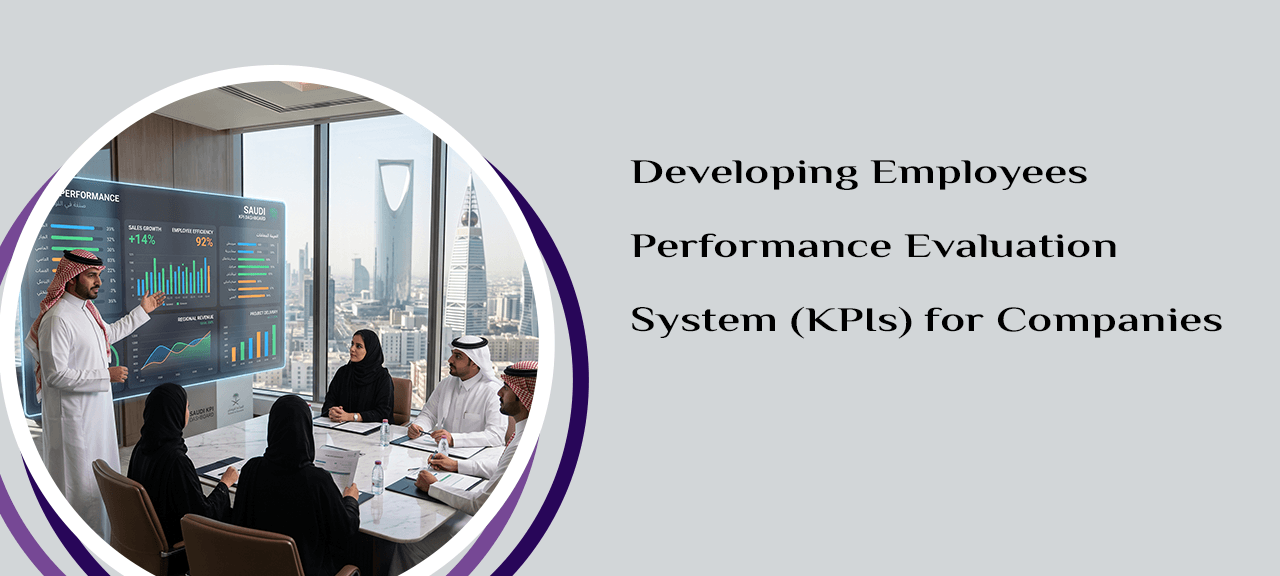
Have you ever wondered why annual review sessions in your company turn into arenas of heated debate and frustration rather than serving as a driver for growth and expansion?
In one startup, high-performing employees felt their extraordinary efforts were treated no differently than those of anyone else; meanwhile, executive management saw that profits failed to reflect the glowing reports submitted by departments. Here, the company relied on an impressionistic evaluation model grounded in emotion and personal relationships rather than real numbers. The absence of a performance evaluation system was eating away at productive energy and fueling talent turnover.
Developing a Performance Evaluation System and Overcoming Operational Challenges

Attempting to evaluate employees without clear criteria is the primary driver of organizational chaos, transforming the relationship between management and the team into a permanent confrontation that dries up the climate for innovation.
Diagnosing Field Gaps in Traditional Evaluation Methods
A successful performance evaluation system begins with an accurate diagnosis of common mistakes that turn evaluation from a growth tool into an operational burden.
1. Evaluation Bias and Personal Impression:
- Halo Effect: Focusing on a single trait of an employee and generalizing it across all aspects of their annual performance.
- Recency Bias: Evaluating an employee based solely on their performance in recent weeks while ignoring achievements throughout the entire year.
- Central Tendency Bias: Giving all employees average ratings to avoid administrative conflict and direct confrontation.
2. Absence of Alignment Between Effort Expended and Final Results:
- Focusing on Working Hours: Measuring attendance and clock-ins instead of measuring the actual value added to the project.
- Neglecting Deliverable Quality: Focusing on task volume without paying attention to error rates or customer satisfaction.
- Ambiguity in Responsibilities: Lack of job descriptions that define quantitative and qualitative goals for each individual.
Strategic Foundation for Transitioning Toward a Modern Performance Evaluation System
Automating a performance evaluation system requires building a strong developmental foundation that supports the effective use of Key Performance Indicators (KPIs).
1. Analyzing the Gap Between the Current State and Future Vision
- Measuring Institutional Maturity: Gauging team readiness to adopt digital evaluation grounded in real numbers.
- Reviewing Technical Infrastructure: Ensuring the presence of software infrastructure to extract data seamlessly.
- Determining Waste Costs: Calculating financial losses resulting from bonuses awarded to undeserving individuals.
2. Crafting SMART Goals and Translating Them Operationally:
- Specificity and Measurability: Transforming general goals like "improving sales" into specific figures like increasing sales by 15%.
- Realism and Timeframes: Linking each indicator to a defined timeframe while considering employee capacity and available resources.
- Institutional Alignment: Connecting an employee's individual goals with the company's annual financial targets to ensure integration.
Scientific Methodology for Building and Applying KPIs

A comprehensive performance evaluation system relies on designing indicators that cover financial, operational, and developmental dimensions, alongside defined weights to avoid misleading figures.
Identifying Indicator Types and Relative Weights:
Indicators vary according to the nature of the job role, as a performance evaluation system demands a balance between quantitative and qualitative metrics.
1. Input and Output Indicators Lagging vs Leading:
- Lagging Indicators: Measuring final outcomes such as realized revenues and net profit margins.
- Leading Indicators: Measuring expected daily activities such as the number of sales calls or meetings.
- Efficiency and Effectiveness Metrics: Measuring time taken to complete a task versus the final quality delivered.
2. Relative Weight Distribution Matrix for Each Job Grade:
- Execution Roles: Concentrating the largest weight (70%) on direct deliverables and adherence to standards.
- Middle Management: Distributing weight equally between team performance and achieving operational deliverables.
- Executive Leadership: Linking 80% of indicators to overarching strategic goals and overall profitability.
Integrating the OKR Framework with a Performance Evaluation System:
Combining Objectives and Key Results (OKRs) with KPIs grants a performance evaluation system the required agility and innovation.
1. Difference Between Stability and Innovation:
- KPIs as a Baseline: Measuring ongoing, repeatable operational performance to ensure steady operational quality.
- OKRs as Forward Ambition: Setting stretch goals that encourage teams to innovate non-traditional solutions.
- Field Integration: Leveraging OKRs to develop static indicators annually and expand business scope.
2. Mechanisms for Measuring Impact and Continuous Assessment:
- Monthly Reviews: Holding brief sessions to review indicator progress and address deviations early.
- Immediate Feedback: Offering advice and observations right after project completion without waiting for the annual review.
- Flexible Adjustment: Recalibrating metrics during sudden shifts in market performance or supply chains.
Digital Rollout Mechanisms and Managing Organizational Change

Activating a performance evaluation system calls for cautious change management to ensure the system serves as a development motivator rather than a pressure tool.
Mapping Steps and Digital Transformation for Performance Evaluation
A successful performance evaluation system aligns with comprehensive digital transformation to collect data automatically and accurately.
1. Automating Measurement via Modern Software:
- Integrating ERP with KPIs: Feeding evaluation data automatically with sales numbers and project completions without human intervention.
- Digital Dashboards: Providing real-time screens for both employee and manager to track performance instantly.
- Reducing Human Error: Eliminating traditional spreadsheets susceptible to tampering or individual adjustments.
2. Implementing 360-Degree Feedback for Leadership Roles:
- Peer and Subordinate Reviews: Measuring leadership skills and direct communication from various organizational angles.
- External and Internal Client Reviews: Linking a portion of metrics to satisfaction levels among interacting parties.
- Unbiased Data Analysis: Extracting mathematical averages to ensure evaluations remain unaffected by a single opinion.
Internal Communication and Fostering a Culture of Transparency
A performance evaluation system succeeds when an employee understands how performance ties to future rewards and promotions.
1. Constructive Feedback Sessions:
- Focusing on Behavior and Results: Discussing specific figures while stepping away from personalizing critiques.
- Setting Performance Improvement Plans (PIP): Structuring timed developmental programs for lower-performing employees.
- Mutual Listening: Hearing operational challenges faced by the employee during task execution.
2. Linking Evaluation to Incentive and Reward Systems:
- Fair Distribution: Awarding bonuses based on pre-documented indicator achievement rates.
- Career Paths: Connecting promotions to consistent, high evaluation ratings.
- Non-Financial Recognition: Highlighting exceptional achievers to foster a positive competitive culture.
Avoid operational confusion and employee resistance to change when introducing a new system.
Let Saee guide your digital transformation and change management with flexibility and complete confidence.
Conclusion:
Successful institutions do not grow by chance; they are built through discipline, tracking, and investing in developing a performance evaluation system that restores your operational compass and protects your financial investments by placing the right person in the right role based on unyielding numbers.
When you decide to transition your work environment from individual guesswork to advanced governance, make objective evaluation the foundation of your decisions. Companies that measure performance transparently are the only ones capable of shaping the future and excelling in the competitive arena.
Connect with Saee experts today and get a customized consultation to develop a performance evaluation system in your company.