
Employee Complaints and How to Handle Them: A Guide to a More Successful Workplace
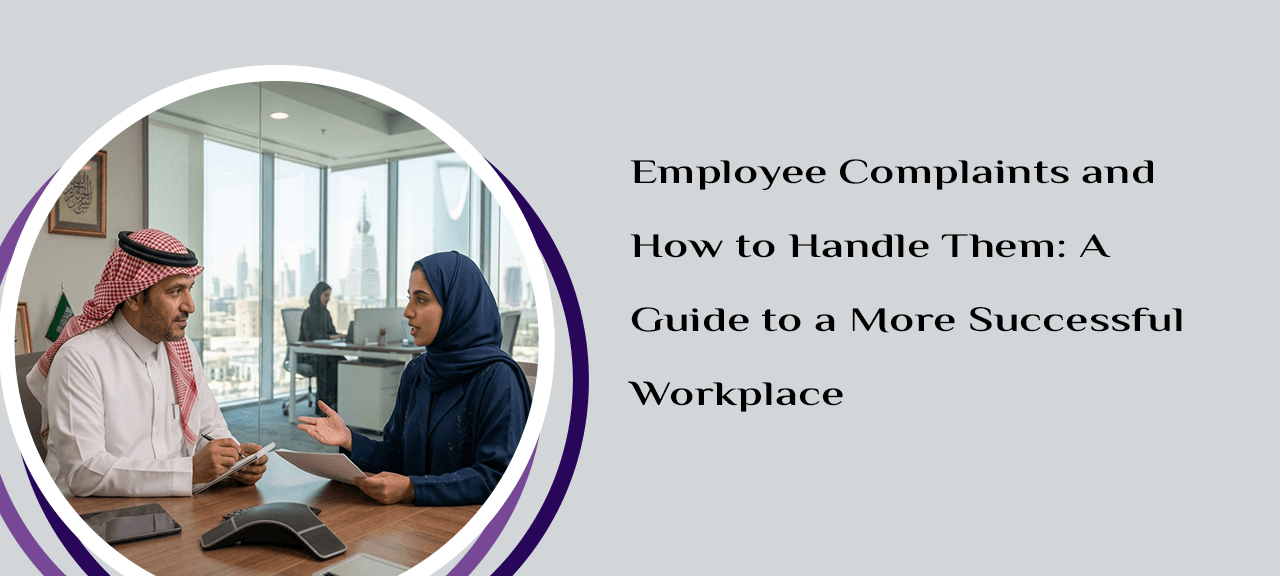
A first complaint, a second, a third, and the result? Losing more than 70% of the company's workforce..!
The loss here does not just stop at an empty office; it extends directly to destroying your reputation before your clients and losing your market share. Ignoring employee complaints is the exact breaking point for the largest organizations.
High-caliber talent does not quit out of nowhere; they leave due to accumulated friction and the continuous dismissal of their voices. Therefore, let us explore in this article how to handle these complaints and prevent disaster before it strikes.
What is the Concept of Employee Complaints in Modern Management Thought?

Simply put, the concept of employee complaints is a formal or informal expression issued by the human talent within an organization, stating their dissatisfaction or distress regarding a specific matter affecting their daily work environment.
This can stem from overlapping authorities, administrative mistreatment, a lack of fairness in evaluations, or a shortage of operational tools. The goal of this expression is to draw upper management's attention to fixing an organizational flaw that negatively impacts general productivity levels.
Understanding this definition of the word "complaint" helps management realize that employee complaints are not mere whining or attempts to stir up side problems. Instead, they are development tools and early indicators used to discover gaps before they escalate into costly legal or financial crises.
What are the Causes of Corporate Employee Complaints?
Objections never appear out of nowhere; unfortunately, they are the result of clear issues and unaddressed accumulation within the daily workflow, such as:
- Unclear roles: This creates continuous conflict over responsibilities and places unfair pressure on top talent.
- Reliance on verbal directives: This leads to constant misunderstandings and lost tasks.
- Perceived bias: A feeling among employees that there is a lack of fairness in distributing promotions and annual bonuses relative to their efforts.
- Workplace bullying: When middle management ignores capabilities, suggestions, and talent.
- Unrealistic demands: Assigning impossible requirements without providing adequate technical, financial, or human support.
- Monopolized opportunities: A feeling among the workforce that certain groups dominate training and advancement opportunities within the establishment.
Since these problems will not resolve themselves, a decisive step must be taken to address this crisis.
7 Smart Strategies to Handle and Resolve Employee Complaints:
To turn these objections into developmental tools that protect your establishment and secure the stability of your talent, you must manage and resolve these complaints using the following strategies:
1. Active and Immediate Listening
Provide the aggrieved employee with a safe, confidential space to express their problem completely without interruption or hasty judgment.
2. Automating and Securing Anonymous Reporting
Provide encrypted digital channels and internal platforms that allow employee complaints to be submitted with absolute confidentiality, shielding the employee from any professional retaliation or workplace consequences.
3. Data-Driven, Neutral Investigation
Separate personal relationships from business operations. Rely entirely on tangible evidence, dates, and documented testimonies to examine the root of the problem and identify the responsible party.
4. Decisiveness and Public Policy Enforcement
Avoid delays in decision-making, as stalling a solution kills employee loyalty. Decisive actions must be taken to address the root causes of the issue.
5. Follow-up and Impact Evaluation
The role of managing employee complaints does not end with closing the investigation file. Regular follow-up sessions must be scheduled with the employee after a period to ensure the issue and its damage have truly been resolved.
6. Restructuring Governance and Separating Roles
If the investigation reveals that the complaint stems from a struggle over influence or authority, immediately rewrite job descriptions and clarify the actual owner of each decision.
7. Joint Communication Skills Training
If complaints recur across different departments, HR must step in with unified workshops to boost emotional intelligence and effective communication, building a shared ground of understanding.
What is the Danger of Ignoring Employee Complaints in Companies?
Ignoring employee complaints leads to direct damages that threaten a company's stability and profitability. When management leaves problems unaddressed, the work environment turns into a toxic, draining space.

This drives top talent and premium employees to resign, forcing the company to incur heavy losses to re-hire and re-train new staff.
The damage does not stop there. A frustrated employee will not deliver high productivity or excellent service. This directly degrades work quality and tarnishes the firm's reputation before its clients in the market.
The ultimate end result is a drop in sales and a loss of profits to competitors.
How Does Management Differentiate Between Frivolous and Legitimate Complaints?
Leaders and HR professionals separate personal settling of scores from professional interests based on the language of facts. The report must be subjected to a process of examination and verification against tangible operational evidence:

- Legitimate Complaints Based on Facts: These employee complaints are specific, backed by concrete evidence, and focus on operational issues, overlapping authorities, or unprofessional behavior that halts productivity. Their clear goal is to fix a flaw to ensure smooth workflows.
- Frivolous Complaints Based on Personalization: These rely entirely on emotions without mentioning a specific incident. These complaints frequently surface in sync with annual evaluation cycles, promotions, or when a particular department achieves notable success, aiming at personal targeting without any material proof.
Common Mistakes Management Makes When Handling Internal Crises
While executing your steps to resolve employee complaints, beware of falling into these administrative traps:
- Ignoring the problem and constantly delaying action.
- Unstudied, personal bias toward one party over another.
- Enforcing temporary fixes and superficial remedies.
- Conducting delayed, slow-paced investigations.
- Focusing on punishing individuals rather than system reform.
The Biggest Mistake: Handling crises with a temporary firefighting mindset instead of introducing tight system governance to guarantee the problem never repeats.
Conclusion:
Ultimately, employee complaints are not an administrative burden or mere whining; they are a mirror reflecting the health and governance of your operational system.
As we have explored throughout this article, dismissing the voices of your talent does not just result in losing more than 70% of your workforce—it extends to damaging your commercial reputation and driving losses to your competitors. A smart leader understands that active listening, neutral fact-based investigations, and avoiding common pitfalls like bias and shallow fixes are the only ways to resolve employee complaints. This shifts the workplace from a draining environment into an empowering ecosystem that propels productivity to the top.
Do you want to build a governance framework that protects your workplace? Reach out to the consultants at Saee today.