
Corporate governance consulting in Saudi Arabia
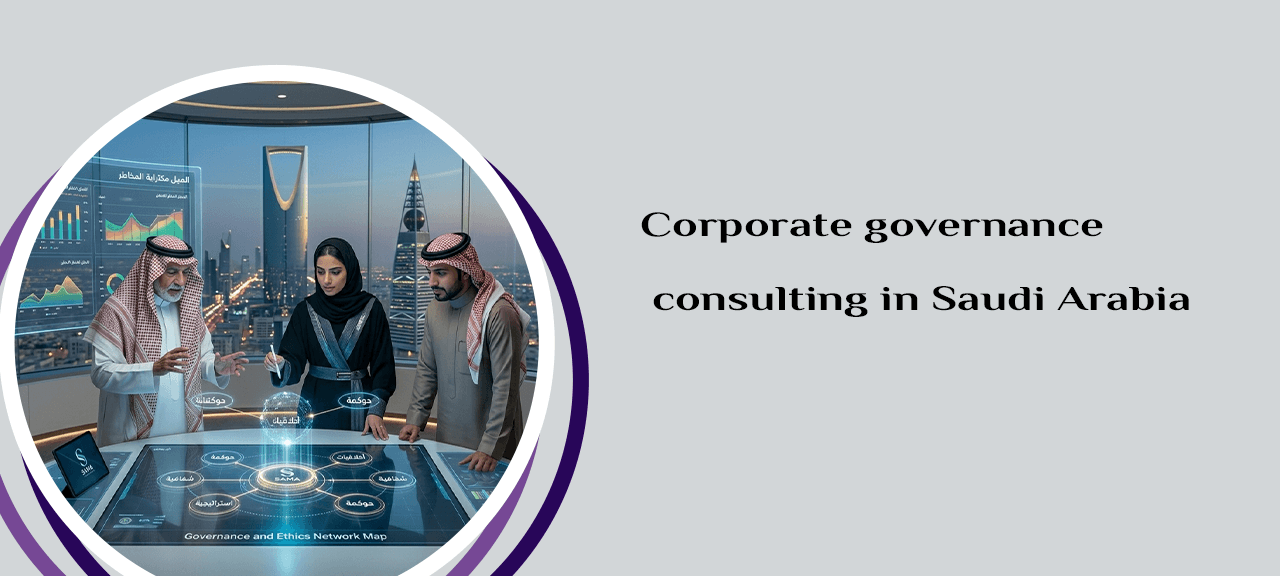
Why Do Some Companies Withstand the Fiercest Economic Crises While Others Fall at the First Hurdle?
The secret lies not just in the size of the capital, but in the hidden systems that manage the summit: Corporate Governance.
As the Kingdom of Saudi Arabia undergoes rapid economic evolution under Vision 2030, corporate governance is no longer a mere legal protocol. It has become a strategic necessity for every entity seeking sustainability, market trust, and institutional excellence. Before making any pivotal decisions, let us explore the essence of this concept.
What is the Meaning of Corporate Governance?

In simple terms, corporate governance means that every procedure and transaction within the company is transparent and organized, where every individual understands their role and responsibilities. It is a framework of systems and rules that dictate how a company is directed and controlled to ensure transparency, fairness, and sound decision-making that serves the interests of the company and its stakeholders.
Governance defines:
- Who makes the decision?
- How is the decision made?
- Who monitors the execution of that decision?
The concept can be summarized in the following pillars:
- A set of rules and bylaws governing the relationship between the Board of Directors, shareholders, and executive management to ensure workflow follows studied plans.
- It aims to establish principles of accounting and disclosure, preventing conflicts of interest and mitigating administrative and financial risks.
- It safeguards the rights of all stakeholders and ensures fair treatment of shareholders, thereby fostering trust in the work environment.
- A mindset aimed at achieving performance excellence and ensuring the long-term continuity and growth of the company.
What is the Objective of Governance?
Governance aims to strike a perfect balance between all parties within the company, including shareholders, the board of directors, executive management, and stakeholders. Achieving this balance leads to:
- Achieving Transparency: Ensuring financial and administrative information is clear to all stakeholders.
- Justice and Protection: Implementing fairness and protecting the rights of all parties without discrimination.
- Elevating Management Efficiency: Organizing the decision-making process and eliminating randomness.
- Risk Mitigation: Reducing financial and administrative errors, overlaps, and violations.
- Investor Confidence: All of the above naturally leads to increased trust from investors and global partners.
What Does Corporate Governance Include?
To manage a company professionally and provide effective oversight, governance must include these essential elements:
- Organizational Structure: Clearly defining roles and responsibilities between the board and executive management.
- The Board of Directors: Setting strategies, making critical decisions, and monitoring performance.
- Internal Audit: Detecting errors and reducing financial and administrative risks.
- Internal Bylaws: Regulating internal work and clarifying decision-making paths.
- Disclosure and Transparency: Presenting financial information and reports clearly to shareholders.
- Risk Management: Identifying potential threats and creating proactive response plans.
- Compliance: Strictly adhering to local legislation and regulatory bylaws.
Why Do Saudi Companies Need It?
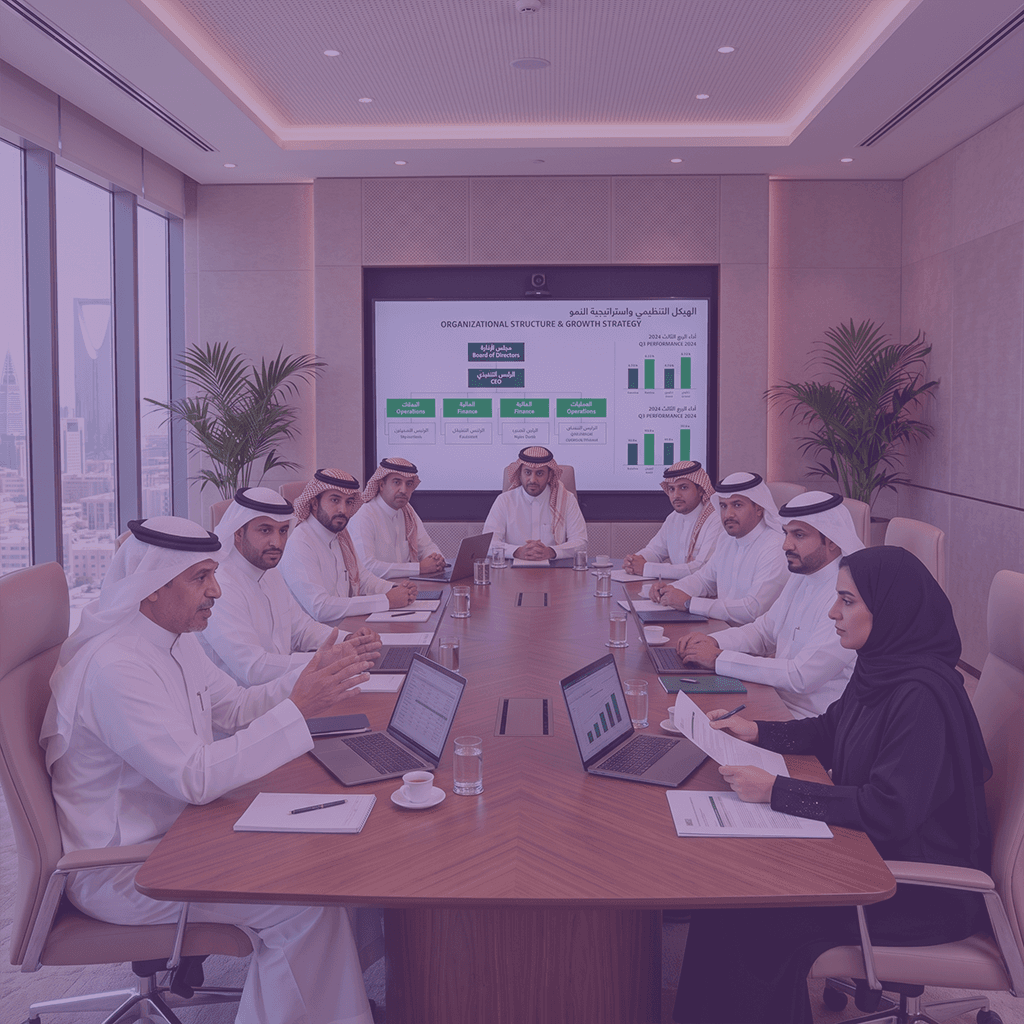

Implementing corporate governance is no longer an option—it is a survival requirement in a competitive market.
Key reasons include:
- Boosting investor confidence.
- Improving decision-making quality.
- Reducing errors and risks.
- Smoothing operations within the company.
- Protecting shareholder rights.
- Supporting growth and sustainability.
With these principles and their importance clear, the most important question arises…
How can these texts be translated into practical reality that develops your company?
This is where the vital role of corporate governance consulting within the Saudi market comes in, to ensure your organization's transition from traditional to global professionalism.
The Role of Corporate Governance Consulting in Saudi Arabia!
Specialized consulting helps you achieve tangible, sustainable results. Its most prominent roles include:
1. Assessing the Current Status
Consultants evaluate the current administrative state to determine its alignment with approved governance standards. This includes reviewing the organizational structure and identifying gaps between current practices and regulatory requirements.
2. Compliance with Regulations
Ensuring your company complies with all laws of the Ministry of Commerce and Capital Market Authority regarding corporate governance.
3. Protecting Investments
Building a monitoring system that protects the rights of shareholders and stakeholders, enhancing their confidence through the application of governance.
4. Supporting Companies in Transitional Phases
The value of governance consulting is most evident when a company transitions, such as converting into a Joint Stock Company.
5. Building Frameworks and Policies
Consultants assist in preparing the necessary organizational infrastructure, such as:
- Board of Directors Charters.
- Delegation of Authority (DoA) matrices.
- Conflict of Interest and Disclosure policies.
- Remuneration and Internal Control policies.
6. Increase in Market Value
Making the company an attractive destination for investors and banks by adhering to global corporate governance standards.
7. Risk Management
Predicting administrative and financial crises and developing proactive solutions to ensure the company's stability.
Who Should Use Governance Consulting?
Best Corporate Governance Consulting is not tailored to one type of company, but is needed by any entity that wants to organize its operations and grow properly in the market. This diagram illustrates who should benefit from this service:

How SAEE Consulting Creates the Difference?
Leading organizations in the Kingdom realize that the first step starts with choosing a partner who understands the specificities and challenges of the Saudi market.
SAEE Consulting stands out as a strategic partner offering innovative, specialized solutions designed to fit the size and aspirations of your entity.
What Does SAEE Provide to Enhance Governance in Your Facility?
- Evaluating your current systems and identifying existing gaps.
- Comprehensive organization of tasks, meeting mechanisms, and decision-making protocols.
- Crafting a technical matrix for distributing power, aimed at accelerating work while reducing uncalculated risks.
- Designing incentive-based policies linked to performance quality, helping you attract top-tier leadership talent.
- Developing customized guides that direct ethics and policies within the facility.
Conclusion:
Governance is not a burden; it is the framework that allows for limitless growth. As discussed in this guide:
- It is a system that ensures transparency, fairness, and accountability.
- Its application minimizes risks and maximizes investor trust.
- Consulting turns theory into practice, building a shield for your company's future.
Connect with saee experts today to lay the foundation for a sophisticated institutional future.
FAQ:
What is the concept of Corporate Governance?
It is a set of rules and systems that regulate company management, ensuring transparency, fairness, and accountability between management, shareholders, and stakeholders to prevent corruption.
What are the duties of a Governance Officer?
- Implementing governance policies and procedures.
- Ensuring compliance with laws and regulations.
- Monitoring performance and ensuring accountability.
- Managing risks and internal controls.
What are the Four Elements of Governance?
- Transparency: Clarity and availability of information.
- Accountability: Holding officials responsible for their decisions.
- Fairness: Achieving equality between all parties.
- Responsibility: The commitment to making sound decisions that serve the company.