
Talent Acquisition Strategies to Reduce Employee Turnover
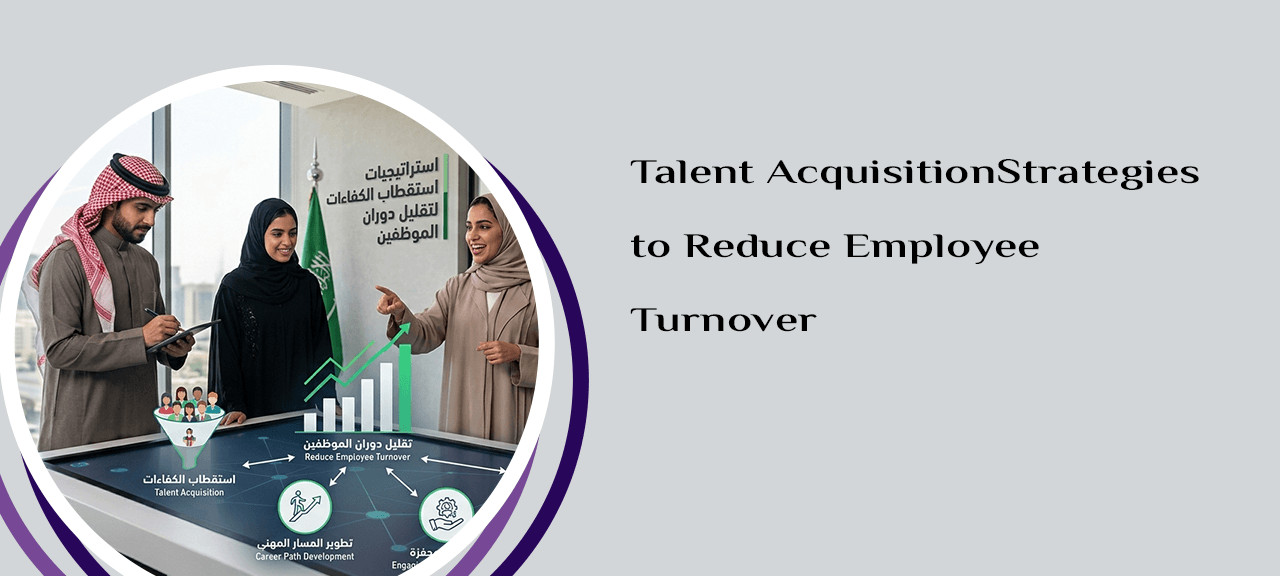
You pour immense effort into your recruitment pipeline, only to be blind-sided by a sudden resignation.
This recurring scenario is the ultimate nightmare facing executives and HR directors in today's shifting job market. The harsh reality is that a resignation crisis rarely triggers from a sudden lack of incentives or workplace perks; its roots sink much deeper, starting at step one.
Many enterprises mistake mere headcount filling for true Talent Acquisition. They lack the strategic framework required to discover and secure the right people. So, how do you design a hiring strategy that guarantees loyalty, consistency, and long-term stability? Let's break down the answers together.
Defining the Baseline: Talent Acquisition vs. Employee Turnover?
To manage your corporate human capital intelligently, you must first understand the fundamental equation governing organizational stability. This equation balances two distinct scales: inputs hiring and outputs attrition.
What is Talent Acquisition?

Talent Acquisition is a highly structured, continuous corporate strategy focused on identifying, attracting, and onboarding premium minds and skilled professionals of both genders. It completely moves away from reactive, short-term hiring meant to fill an immediate structural void. Instead, it serves as a calculated investment to onboard professionals who organically align with your organizational culture and possess the core competencies needed to drive future business scalability.
What is Employee Turnover?

Employee turnover is the metric that measures the percentage of workers who leave an organization—whether through voluntary resignation or termination—and are replaced by new hires within a specific timeframe, typically a year. A spike in this rate indicates an underlying friction within the internal culture or a fundamental mismatch made during the initial selection process. This friction ends up draining corporate budgets through continuous, repetitive hiring cycles.
The Inverse Relationship: Quality vs. Attrition:
The connection between onboarding quality and attrition is entirely inverse. When an enterprise elevates its Talent Acquisition framework using scientific benchmarks and rigorous cultural alignment, its employee turnover rates naturally plummet. This protects the organization from heavy financial drains and safeguards operational productivity and profitability.
The 50% Rule: Implementing a precise, targeted hiring strategy cuts the costs associated with re-advertising roles and onboarding training by over 50%, allowing you to build a resilient, profit-generating workforce.
Common Sourcing Blunders That Spike Turnover Rates
Even with a dedicated hiring team, specific procedural mistakes can quietly undermine your strategy, inflating your turnover rates and eroding your recruitment ROI:
- Fixating Solely on Resumes: Evaluating credentials on paper while completely ignoring how well the candidate’s values align with your actual day-to-day workplace culture.
- Conducting Superficial Interviews: Relying on generic, conversational screening without testing hard skills or evaluating the candidate’s strategic problem-solving approaches.
- Vague Job Previews: Failing to clearly define daily operational duties, which creates highly unrealistic expectations for the incoming professional.
- Extended Feedback Lags: Delaying communication during the hiring process, which prompts premium candidates to accept offers from agile competitors.
- A Disorganized Candidate Experience: Delivering a chaotic interview journey, leaving a poor first impression of your company's professionalism.
- Uncompetitive or Opaque Offers: Presenting compensation packages that lack clarity or market equity, fostering early feelings of insecurity and underappreciation.
- Neglecting Post-Hire Support: Failing to provide structured guidance during the critical first few months, which often drives new hires to walk away early.
Avoiding these common operational mistakes ensures your energy is directed into an optimized, sustainable hiring ecosystem.
6 Proactive Strategies to Attract Talent and Prevent Resignations:
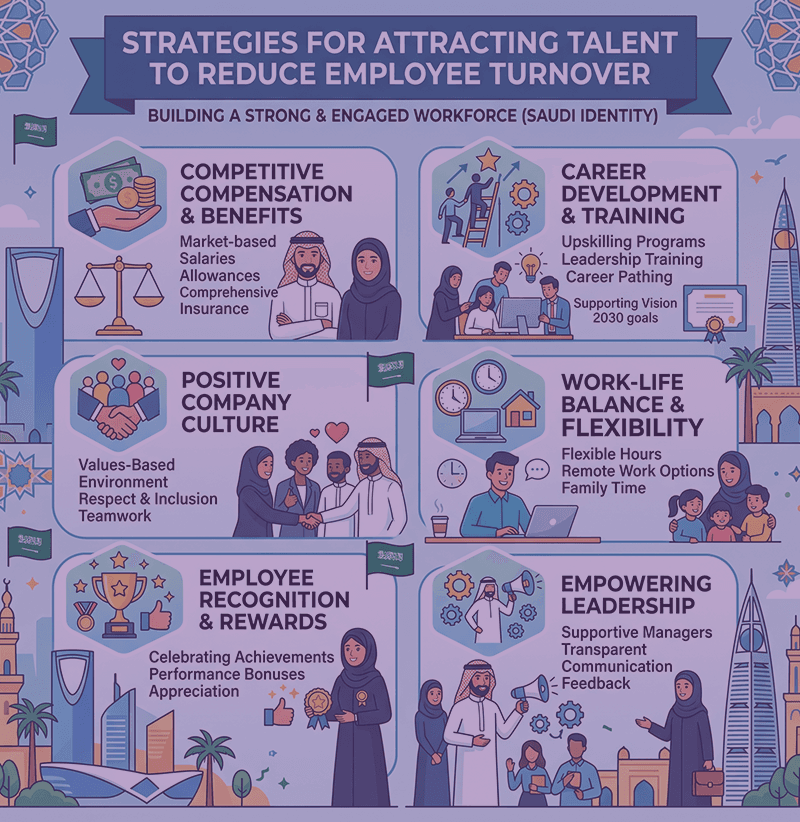
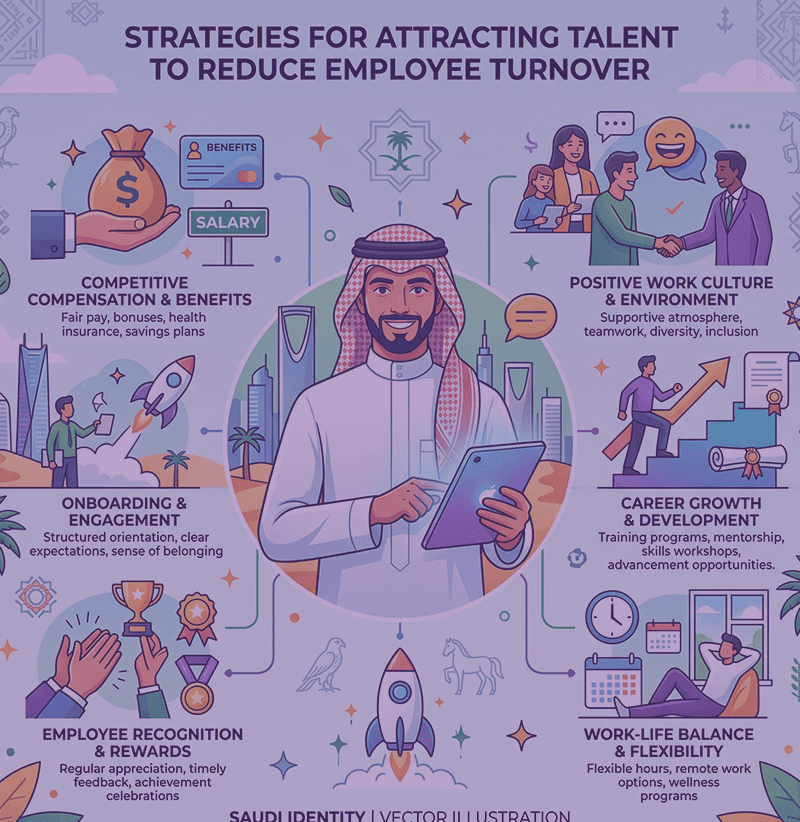
To keep your business at the forefront of your industry and lock down internal structural stability, deploy these 6 practical corporate strategies:
1. Build an Authentic Employer Brand
Successful talent acquisition requires a highly visible corporate identity. Showcase your internal culture, core values, and team milestones on professional networks like LinkedIn to make your company a highly sought-after workplace.
2. Hire for Cultural Alignment
Design structured, competency-based interviews that test how well a candidate's personal work ethics align with your corporate mission. This deep alignment guarantees they will remain an asset to your business for years to come.
3. Draft Transparent, Realistic Job Descriptions
A primary trigger for rapid, early turnover is immediate reality shock. This happens when a newly hired employee discovers their day-to-day operational responsibilities look nothing like what was promised during interviews.
4. Structure Competitive, Flexible Compensation
Your sourcing efforts will stall if your baseline salaries trail behind market averages. Run regular benchmarking studies against your competitors and introduce flexible perks—like performance-linked bonuses or wellness programs—to meet modern expectations.
5. Leverage Internal Employee Referral Programs
Empower your current workforce to recommend trusted former colleagues or industry peers. This approach streamlines your talent sourcing pipeline, introducing vetted professionals who fit easily into your structure.
6. Optimize the Integration and Onboarding Journey
The talent sourcing journey does not conclude the moment an employment contract is signed. An employee's initial 90 days inside your enterprise serve as the defining period that shapes their decision to stay or exit.
First-Month Friction: Why Premium Talent Walks Away Early:
Data indicates that the highest risk of attrition occurs within the opening weeks. Why does a highly vetted professional choose to resign abruptly after just a month on the job? Early resignation serves as a clear warning sign pointing to a deep divide between corporate promises and daily reality:
- Operational Disorganization: Arriving on day one to find no dedicated workspace, missing hardware, or a total lack of a clear guidance plan highlights internal chaos and accelerates early exits.
- Role Discrepancy: Discovering that the actual tasks required on the floor differ significantly from the agreements made during the negotiation phase.
- Toxic Cultural Indicators: Spotting early signs of a toxic workspace, internal friction, unsupportive leadership, or a systemic lack of recognition within the first few weeks.
- Absent Probationary Support: A complete lack of clear feedback, structured mentorship, and transparent communication from direct managers during the initial evaluation period.
An exceptional Talent Acquisition strategy loses its entire value if it isn't paired with an intentional onboarding journey that reassures new hires they made the right career choice.
How Decision-Makers Measure Recruitment Success?
Therefore, you should not evaluate your success based on personal impressions to assess recruitment efficiency; instead, rely on clear indicators such as:
- Measuring the percentage of employees who remain with the company for at least one full year.
- Calculating the time elapsed from the moment the job vacancy is announced until the contract is signed, with the objective of minimizing it.
- Summing up total expenses spent on advertisements, platforms, and interviews to measure the financial efficiency of the recruitment department.
- Evaluating the new hire’s performance and productivity levels after the first six months, comparing them against the expectations established during talent acquisition.
In short, decision-makers measure recruitment success through a formula that connects hiring speed, low cost, and high employee retention rates to ensure building a stable team that drives the organization’s profitability. But the toughest challenge is.
Retaining Talent Long-Term:
Attracting premium minds is only half the battle; the second half requires a dedicated strategy focused on long-term retention:
- Transparent Career Pathing: Provide clear, structured growth roadmaps so professionals can visualize their future upward mobility and financial evolution within your business.
- Work-Life Harmonization: Introduce flexible work models, such as hybrid options, paired with meaningful recognition programs to validate employee output.
- Upskilling Opportunities: Invest continuously in refining your team's specialized skill sets. This makes them feel highly valued and deepens their long-term loyalty to the firm.
- Open Communication Channels: Build a transparent internal culture that encourages employees to voice operational hurdles, backed by agile performance management systems.
Conclusion:
Ultimately, your workforce remains the core engine driving commercial expansion and market distinction. Strategic Talent Acquisition is not an isolated administrative chore that wraps up once an offer letter is accepted; it is an ongoing corporate commitment. It begins with intelligent, data-backed selection and succeeds by fostering a supportive workspace that inspires innovation while stopping silent attrition.
If you are ready to protect your recruitment investments and build a highly stable, elite workforce that positions your company at the top of your market, review your current hiring and retention frameworks today.
Are you searching for rapid, localized solutions for your business? For expert, professional consultations tailored to elevating your talent acquisition and HR infrastructure within the Saudi market, reach out to the specialists at Saee now.