
The most prominent administrative problems facing companies
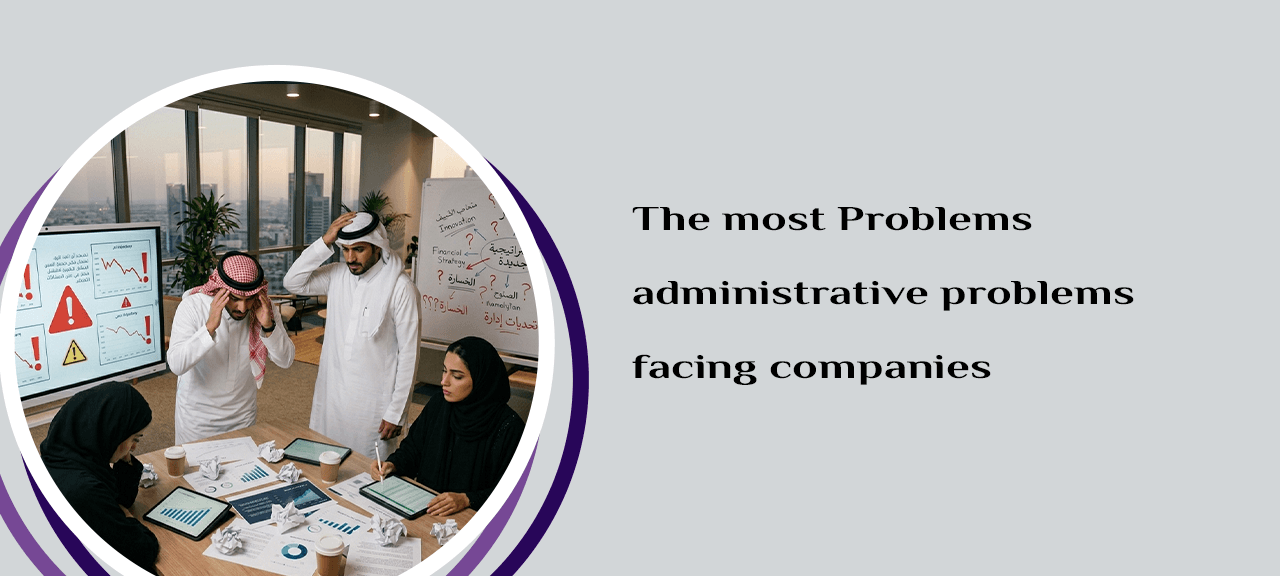
Management is Not Just Directing... It is the Art of Survival!!
In the business world, an organization can possess the largest budgets and still collapse overnight. Often, hidden administrative problems are the silent killers that turn industry giants into mere memories. Ignoring these issues doesn't make them disappear; it allows them to spread until they become part of the work culture.
This means you will pay billions in the future!
To end this nightmare before it begins, let us preempt and treat it through this comprehensive guide.
The Roots of Administrative Problems: When and Where Does the Decline Begin?

Major corporate crises do not emerge from a vacuum. They are the result of small, accumulated frictions that balloon over time. Identifying the roots of these problems is the first step toward saving the institution from inevitable decline. Typically, this descent starts when decisions are based on personal impressions rather than data and facts.
The real sources of administrative rot in any entity include:
- Absence of a Unified Vision:When employees lack a clear understanding of the company's "Grand Goals," each department begins to operate as a separate entity, leading to a direct conflict of interest.
- Weak Communication Channels:The decline truly begins when lower management levels become afraid to deliver the truth to upper management.
- Haphazard Recruitment:Administrative problems take hold when managers are selected based on seniority or personal relationships rather than leadership competence.
- Absence of Governance and Systems:Operating without clear laws makes "impulsive decision-making" the ruler. This is the perfect climate for administrative chaos.
A List of the Most Prominent Administrative Problems Draining Organizations!

Not all crises come from the outside. The most dangerous problems are those that grow silently within the entity, gradually draining its resources until it is hollowed out.
- Bureaucracy: When a simple request passes through a long chain of signatures, innovation is killed, and market opportunities are lost.
- Placing all power in the hands of one person creates a state of dependency and an "escape from responsibility" for the rest of the team.
- Placing the wrong person in a sensitive position generates a chain reaction of failures that eventually destroys the organization's reputation.
- Discrimination or the absence of incentives creates a toxic work environment, driving your greatest minds directly to your competitors.
- Clinging to outdated methods in the age of digital transformation puts the company at the back of the race.
- When departments operate without effective control systems, operational errors increase, exposing the entity to legal and financial risks.
- A lack of inter-departmental coordination leads to project delays, destroying credibility in the eyes of clients.
- Organizations that stingily refuse to invest in their employees suffer from performance stagnation and an inability to handle modern tools.
- Spending hours in useless meetings without emerging with clear, actionable results.
If you think the cost of development is high, you haven't yet calculated the staggering price your company pays every day due to this internal bleeding.
The Devastating Impact on Profits and Growth!

Administrative problems don't just cause headaches; they have a direct impact on the bottom line:
- Financial Waste: Resulting from misallocation of resources and repeated operational errors.
- Inability to Compete: The organization becomes too slow and expensive to compete on price or innovation.
- Loss of Trust: Investors and customers lose faith, halting any plans for future expansion.
- Persistent Low Productivity: Confusion leads to a loss of direction and mission in the market.
So how can institutions break out of this vicious cycle?
And how can these weaknesses be turned into strengths?
Seeking Experts is the Only Solution!
Treating administrative problems from the inside often hits a wall of institutional blindness, where leadership becomes part of the system that needs changing. This is where the absolute necessity of Management Consulting Firms arises.
The importance of collaborating with consultants is manifested through:
- Objective Reality Analysis: They identify the real sources of waste that cause "red numbers" without internal bias.
- Bypassing Trial and Error: Consultants provide the distilled experience of successful practices applied in major organizations, saving you years of wandering.
- Restructuring and Governance: Building strategic planning systems that prevent the recurrence of administrative issues.
- Change Management: Executing major shifts professionally to reduce internal resistance.
How SAEE Makes the Difference in Your Organization's Journey?
After realizing the danger posed by administrative problems, the question is: Will you settle for awareness, or will you actually start the change?
This is the difference between an organization that recognizes a defect and one that decides to fix it. With saee, administrative problems are treated as roots requiring fundamental treatment.
SAEE works on:
- Identifying Hidden Gaps: Uncovering organizational vulnerabilities and treating them at the source to ensure stability.
- Designing a Responsibility Matrix: Ending task overlap and preventing future administrative friction.
- Building Strict Governance: Ensuring transparency and protecting resources from waste.
- Transforming Goals into Action: Turning "Big Goals" into daily executive steps that eliminate chaos.
- Integrating Modern Technology: Reducing the human error responsible for most administrative failures.
- Providing Data-Driven Reports: Giving leadership a realistic vision far removed from personal estimates.
Save your organization now! Connect with SAEE experts today and begin the journey of true transformation.
Conclusion:
In the end, administrative problems remain the true test of any institution's strength. Companies that choose to ignore these silent crises are choosing the path of gradual decline. Those who have the courage to face the defect and fix it are the ones who guarantee themselves a place at the peak.
Ensure the sustainability of your success—book your consulting session with saee experts now.
FAQ:
What are the most prominent problems in General Management?
- Bureaucracy and complexity of procedures.
- Weak strategic planning.
- Lack of efficiency and skills among employees.
- Weak oversight and accountability.
- Resistance to development.
What challenges does management face today?
Management faces challenges like decision-making under pressure, resistance to change from employees, and a shortage of talent. Additionally, rapid technological development requires constant adaptation, necessitating flexible planning and the ability to handle shifts effectively.
Methods for solving administrative problems?
- Deep Analysis: Identifying the root cause of the issue.
- Action Plan: Developing and implementing a solution gradually.
- Improving Communication: Bridging the gap between management and staff.
- Training: Developing employees to raise competence.
- Monitoring: Applying controls to ensure the problem does not recur.